Our Short List of 3

- Best for: Gardeners who want a fixed stainless handle for routine soil and mulch work.
- Brand: Walensee
- Tines: 17 steel tines
- Handle material: Stainless steel
- Overall length: 5.4 feet

- Best for: Tall users and households that share one rake between people of different heights.
- Brand: BlumeTrec
- Handle: Adjustable, up to 68 inches
- Tines: 17 steel tines
- Head: Dual-sided metal head
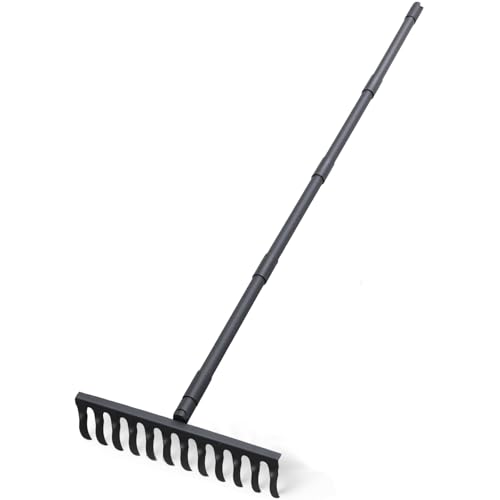
- Best for: Spreading gravel and coarse mulch, and lighter leveling in smaller beds.
- Brand: FreshFarm
- Overall length: 60 inches
- Tines: 12 tines
- Handle: Adjustable long handle
All 4 Picks at a Glance
| Product | Specs | Action |
|---|---|---|
| Walensee 5.4FT Bow Rake |
| Check price on Amazon |
| BlumeTrec Bow Rake, 68-Inch |
| Check price on Amazon |
| FreshFarm Bow Rake, 60 Inch |
| Check price on Amazon |
 Lilyvane 63-Inch Bow Rake |
| Check price on Amazon |
Key takeaways
- Compare the best bow rakes for leveling soil, spreading mulch and breaking clods, with tine counts, handle lengths and materials checked on each listing.
A bow rake is bought for soil, not leaves, and that single decision drives everything else. You need a rigid steel head that can level a seedbed, pull mulch into place and break up clods without the tines flexing or the head working loose. The real choice is between a fixed handle built for strength and an adjustable handle built for flexibility, and between tine counts that suit fine soil or coarse gravel.
This guide is for vegetable gardeners preparing beds each spring, homeowners spreading mulch and gravel, and taller users who need enough handle length to work upright. Every rake below was selected from its Amazon listing by the details stated there: tine count, head material, handle material and overall length, so you can match the tool to the ground you actually work.
Quick Picks
As an Amazon Associate we earn from qualifying purchases.
| Product | Best for | Key spec from title |
|---|---|---|
| Walensee 5.4FT Bow Rake | Everyday bed prep with a rust-resistant handle | 17 steel tines |
| BlumeTrec Bow Rake, 68-Inch | Tall users and shared tools | 68-inch adjustable handle |
| FreshFarm Bow Rake, 60 Inch | Lighter leveling in smaller beds | 12 tines |
| Lilyvane 63-Inch Bow Rake | Mid-weight all-round soil work | 63 inches, 17 tines |
How to Choose
Head Width and Tine Count
Tine count decides what the rake can move. Closely spaced tines, around sixteen or seventeen, comb fine soil smooth, pull small stones out of a bed and leave an even surface for sowing. Wider spacing, closer to twelve tines, lets soil fall through while you drag gravel or coarse mulch, and it clogs less in chunky material. Match the count to the material you handle most: fine beds want more tines, gravel paths want fewer. Head width matters too, because a wide head covers open ground quickly but becomes awkward between rows of established plants.
Steel Head Construction
The head takes every impact, so its construction decides how long the rake lasts. Look for a steel head with tines formed or welded as one rigid piece, since a bow rake is pulled toward you under load and a weak head twists at the neck. Listings state head material and tine counts, and some name the steel type, so read those fields rather than trusting photos. A head that connects to the handle with a solid ferrule or reinforced collar resists the loosening that ruins cheaper rakes after a season of gravel work.
Handle Material and Length
Handle material changes both weight and lifespan. Stainless steel handles shrug off rain and store well outdoors, fiberglass is light and strong, and wood can dry out or crack if it lives outside. Length is the comfort issue: a rake around five feet suits most adults, while taller gardeners should look at sixty-three inches or more so they can pull the head flat without stooping. Check the overall length stated on the listing against your height, because a rake that is too short forces a bent back through every bed you prepare.
Fixed Versus Adjustable Handles
Adjustable handles telescope or join in sections, which makes one rake fit several users and lets it store in a short shed or car boot. The trade-off is the joint itself: every connection is a point that can flex, rattle or slip when you lever against compacted soil. A one-piece fixed handle has no such weak point and suits heavy daily work. Decide honestly how you will use the tool. If the rake will be shared or transported often, adjustability earns its place; if it will grade gravel every week, fixed construction is the safer buy.
The 4 Best Options
Walensee 5.4FT Bow Rake
- Best for: Gardeners who want a fixed stainless handle for routine soil and mulch work.
- Brand: Walensee
- Tines: 17 steel tines
- Handle material: Stainless steel
- Overall length: 5.4 feet
Gardeners who want a fixed stainless handle for routine soil and mulch work.
The handle length is fixed, so check the stated 5.4-foot length against your height before ordering.
This is the straightforward pick for gardeners who want one fixed-length rake for beds, borders and mulch. The stainless steel handle suits anyone who stores tools in a damp shed or works in wet soil, because the shaft will not rust the way plain steel can or rot like wood. Seventeen steel tines give a fine enough comb for seedbed finishing, and the one-piece format means there is no joint to loosen mid-job. It fits regular vegetable plots and flower beds where the work is steady rather than extreme, and where a dependable mid-length handle matters more than adjustability.
BlumeTrec Bow Rake, 68-Inch
- Best for: Tall users and households that share one rake between people of different heights.
- Brand: BlumeTrec
- Handle: Adjustable, up to 68 inches
- Tines: 17 steel tines
- Head: Dual-sided metal head
Tall users and households that share one rake between people of different heights.
Tighten and check the adjustable handle sections before heavy gravel work, since joints are the first place flex appears.
Tall gardeners and households sharing one rake get the most from this model, because the handle adjusts out to sixty-eight inches, longer than most bow rakes reach. That extra length lets a tall user keep the head flat on the soil while standing upright, and a shorter user can shorten it for control in raised beds. The head is dual-sided with seventeen steel tines, so it covers both raking and leveling passes. It suits families with one tool shed and several users, plus anyone who transports a rake to an allotment and needs it to break down shorter.
FreshFarm Bow Rake, 60 Inch
- Best for: Spreading gravel and coarse mulch, and lighter leveling in smaller beds.
- Brand: FreshFarm
- Overall length: 60 inches
- Tines: 12 tines
- Handle: Adjustable long handle
Spreading gravel and coarse mulch, and lighter leveling in smaller beds.
The twelve widely spaced tines let small stones and fine debris pass through, so check the spacing suits the material you spread.
With twelve tines instead of the usual sixteen or seventeen, this rake is aimed at coarser material and lighter work. The wider gaps let soil and small debris fall through while you pull gravel, bark mulch or stony ground into place, and the sixty-inch adjustable handle keeps the tool manageable in smaller gardens. It is a sensible choice for path maintenance, top-dressing and tidying beds where a fine comb would clog. Gardeners who mostly level fine seedbeds should look at the higher tine counts above, but for mixed cleanup this lighter pattern earns its place.
Lilyvane 63-Inch Bow Rake
- Best for: Gardeners who want a mid-weight, longer rake for mixed soil, mulch and cleanup work.
- Brand: Lilyvane
- Overall length: 63 inches
- Tines: 17 tines
- Item weight: 4.13 pounds
Gardeners who want a mid-weight, longer rake for mixed soil, mulch and cleanup work.
Confirm the stated head width and weight suit your beds, since at just over four pounds it is a mid-weight tool, not a light one.
This sixty-three-inch rake sits between the compact and extra-long options, with seventeen tines and a stated weight a little over four pounds. That combination suits gardeners who find a standard five-foot handle slightly short but do not need a fully extended sixty-eight-inch tool. The adjustable handle lets you fine-tune length for different jobs, from open-ground leveling to shorter pulls inside a raised bed. It is a reasonable all-rounder for mixed plots where one rake handles soil prep in spring, mulch in summer and leaf-and-debris cleanup around beds in autumn.
Which One Fits Your Situation
You Prepare Vegetable Beds Every Spring
Seedbed work rewards a fine comb and a handle that will not loosen halfway through the plot. The Walensee, with seventeen steel tines and a fixed stainless handle, levels soil and pulls out small stones in the same pass. Its one-piece build suits the repeated pulling that bed preparation involves, and the rust-resistant shaft copes with spring weather and damp storage between sessions.
You Mostly Spread Mulch and Gravel
Coarse material clogs fine tines and makes leveling slow. The FreshFarm’s twelve widely spaced tines let soil fall through while gravel and bark stay on top, and its sixty-inch adjustable handle keeps it handy around paths and smaller beds. If your mulch work covers a large open area instead, the Lilyvane’s seventeen tines and longer reach will move material faster per pass.
You Are Tall and Rake Large Open Ground
Height changes everything about raking comfort. The BlumeTrec adjusts out to sixty-eight inches, the longest reach in this list, so a tall gardener can pull the head flat without bending into the stroke. Its dual-sided head also covers ground quickly on open plots. Shorten it for raised beds or shared use, then extend it again for the big leveling jobs.
One Rake Serves the Whole Household
When several people share tools, a fixed length always fits somebody badly. An adjustable model such as the BlumeTrec or the Lilyvane lets each user set a comfortable length in seconds, and both break down shorter for a crowded shed. Households doing mostly fine bed work should lean toward the seventeen-tine Lilyvane; those doing heavier open-ground work get more from the BlumeTrec’s extra reach.
Common Mistakes
- Buying a leaf rake for soil work: flexible fan tines bend against soil and gravel, so the tool fails at exactly the jobs a bow rake exists for.
- Choosing tine count by habit rather than material: fine tines clog in gravel, and wide spacing leaves seedbeds rough and full of small stones.
- Ignoring handle length: a rake that is too short forces a stooped pull, which turns an hour of bed preparation into back pain.
- Prying rocks out with the head: levering against the tines or handle joint bends tines and loosens connections; dig the rock out with a fork or spade instead.
- Leaving the rake outdoors unprotected: steel heads rust and wooden handles weather, so store the tool under cover and wipe the head dry after wet work.
Frequently Asked Questions
What is a bow rake used for?
A bow rake levels and prepares soil: breaking clods, smoothing seedbeds, spreading mulch, compost and gravel, and pulling small stones out of beds. Its rigid steel tines bite into the ground, which is why it handles work a flexible leaf rake cannot. Most gardeners use one in spring for bed preparation and through the season for top-dressing.
What is the difference between a bow rake and a leaf rake?
A bow rake has short, rigid steel tines on a straight head, built to move soil, gravel and mulch. A leaf rake has long, flexible tines in a fan shape, made to gather leaves without tearing turf. A leaf rake bends against soil, and a bow rake is slow on leaves, so they cover different jobs.
How many tines should a bow rake have?
For fine seedbeds and general soil, sixteen or seventeen tines give a smooth finish and catch small stones. For gravel, coarse mulch and stony ground, twelve to fourteen tines clog less and let loose soil fall through. The material you move most often should decide it; gardeners who do both jobs usually pick the higher count.
Can a bow rake spread gravel?
Yes, spreading and leveling gravel is one of its main jobs. The rigid tines pull gravel evenly across paths and driveways, and the flat back of the head smooths the surface afterward. A lower tine count clogs less in coarse gravel. Work in shallow passes rather than dragging a full load at once, which keeps the surface even.