Our Short List of 3
- Best for: Restoring absorbency to detailing towels clogged with wax and sealant.
- Brand: P & S Professional Detail Products
- Item form: Liquid
- Unit count: 32 fluid ounces (1 quart)
- Scent: Unscented

- Best for: Frequent, large microfiber loads at home or in a small shop.
- Brand: Malco Products, Inc.
- Item model number: 122801
- Item form: Liquid
- Unit count: 128 fluid ounces (1 gallon)

- Best for: A first dedicated microfiber detergent for a small towel collection.
- Brand: Chemical Guys
- Item model number: CWS_201_16
- Item form: Concentrated liquid
- Unit count: 16 fluid ounces
All 3 Picks at a Glance
| Product | Specs | Action |
|---|---|---|
| P & S Rags to Riches Premium Microfiber Detergent, 1 Quart |
| Check price on Amazon |
| Malco Microfiber Refresh Concentrated Detergent, 1 Gallon |
| Check price on Amazon |
| Chemical Guys Microfiber Wash Cleaning Detergent Concentrate, 16 fl oz |
| Check price on Amazon |
Key takeaways
- Best detergents for microfiber towels: three concentrated formulas that strip wax and softener residue and restore absorbency, compared by dose, size and scent.
A microfiber towel rarely wears out before it stops working. What usually happens first is quieter: wax, sealant, polish, and fabric softener residue settle into the split fibers until the towel pushes water around instead of drinking it up, glass starts streaking no matter how often you fold to a clean side, and a drying towel leaves haze behind. The towel looks fine. It simply cannot grip anything anymore, and that is a laundry problem, not a towel problem.
Ordinary laundry detergent is formulated for cotton soil, and many formulas add softening or scent agents that coat synthetic fibers. Those coatings are exactly what a clogged microfiber towel does not need. The best detergents for microfiber towels are built for a different job: dissolving bonded, water-repelling buildup and rinsing it completely away, without leaving a coating of their own behind.
This guide covers three dedicated microfiber detergents, compared by what their formulas leave out, how little each load takes, and whether the bottle size matches a small drawer of towels or a shop-sized pile. A note on availability: Amazon blocks automated access to its product pages, so live stock could not be checked for this article. Each listing below was corroborated through Amazon search results and manufacturer or retailer pages, and no live in-stock claim is made.
At a Glance
| Product | Best for | Key spec |
|---|---|---|
| P & S Rags to Riches Premium Microfiber Detergent, 1 Quart | Restoring absorbency to detailing towels clogged with wax and sealant | Concentrated liquid, 32 fl oz, unscented |
| Malco Microfiber Refresh Concentrated Detergent, 1 Gallon | Frequent, large microfiber loads at home or in a small shop | 128 fl oz, up to 128 loads per gallon, unscented |
| Chemical Guys Microfiber Wash Cleaning Detergent Concentrate, 16 fl oz | A first dedicated microfiber detergent for a small towel collection | Concentrated liquid, 16 fl oz, bleach free, orange scent |
How to Choose a Detergent for Microfiber Towels
Start with the residue problem, not the scent
Microfiber fails by clogging, not by tearing. Each split fiber is a tiny hook, and wax, sealant, polish, and softener fill those hooks until water has nothing to grab. A detergent for these towels has one job: dissolve that bonded, water-repelling buildup and rinse it completely away. Ordinary laundry detergent is formulated for cotton soil and often adds softening or scent agents that coat synthetic fibers. Judge every candidate by whether it is built to strip detailing residue.
Check what the formula leaves out
Anything designed to cling to fabric after the rinse is the enemy of an absorbent towel. Fabric softener and dryer sheets work precisely by coating fibers, which is the opposite of what microfiber needs. Look for a formula described as unscented or fragrance free, free of added softeners, and free of bleach, and treat strong perfume as a warning sign rather than a feature. Dish soap and vinegar fall short for the same reason: neither is built to release cured wax or sealant.
Dose decides how far a bottle really goes
Bottle size alone tells you little; the dose per load tells you almost everything. The concentrates in this roundup work at one to two ounces per load, so a quart covers a home user for months while a gallon rated for well over a hundred loads suits a shop washing daily. Check the listing for a stated dose and a load count before you compare sizes, and be honest about your laundry rhythm. A huge jug is poor value if it sits open for years, and a small bottle is a nuisance if you rewash towels every weekend.
Confirm washing machine compatibility
Most microfiber detergents are made for machine washing, but not every formula suits every machine. Look for a listing that names high-efficiency machines explicitly, since HE washers use less water and need a formula that rinses clean at low water volume. The same check applies in a shared or commercial laundry room. All three detergents below are described as safe for standard and high-efficiency machines.
Decide whether you need a pre-soak option
Some towels are only mildly dull, while others have spent a season applying wax, ceramic spray, or heavy polish. For the worst of them, a detergent that also works as a pre-soak is worth more than a slightly larger bottle. A bucket soak in warm water with a measured dose loosens cured residue before the machine cycle. If your basket holds coating towels and applicator pads, pick a detergent whose label describes pre-soak use.
Sort and pre-treat before the machine does the work
Even the right detergent loses to a mixed load. Wash microfiber only with microfiber, because cotton sheds lint that the hooks collect and hold. Keep heavily coated towels, the ones that applied wax or ceramic spray, apart from glass and drying towels, and give the worst of them a bucket pre-soak in warm water with a measured dose before the machine cycle. Warm water helps release residue; very hot water and high dryer heat can damage the fibers.
The Best Detergents for Microfiber Towels
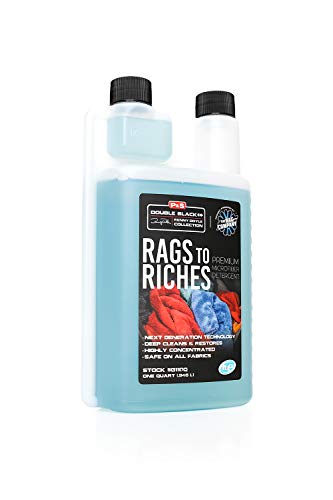
P & S Rags to Riches Premium Microfiber Detergent, 1 Quart
- Best for: Restoring absorbency to detailing towels clogged with wax and sealant.
- Brand: P & S Professional Detail Products
- Item form: Liquid
- Unit count: 32 fluid ounces (1 quart)
- Scent: Unscented
Restoring absorbency to detailing towels clogged with wax and sealant.
Rags to Riches is the bottle detailers reach for when good towels have gone dull under layers of spray sealant and wax. The listing describes a concentrated liquid built to deep clean and restore absorbency and color, safe on all fabrics and free of harmful chemicals, and the quart format suits someone who washes a few loads a month rather than a few a day. It is unscented and replaces your regular detergent for microfiber loads outright, so nothing perfumed is left sitting in the fibers.
The formula comes from P & S Professional Detail Products, a family-owned company with more than 50 years in the professional detailing industry, and it sits in the Renny Doyle Double Black Collection, the brand’s master-level line. The quart bottle carries measurement markings on the side, the formula is marked as high-efficiency compatible, and the label describes use both as a wash aid and as a pre-soak for heavily soiled towels. For a household with a modest stack of coating, drying, and glass towels, the quart is the right scale.
A quart will not feed a shop, and anyone washing detailing towels daily will work through it quickly and wish they had bought the gallon version of the same formula, which sells under a separate listing. It is premium-priced next to general laundry detergent, so it makes sense only if your towels are worth protecting.
Pros:
Cons:
Malco Microfiber Refresh Concentrated Detergent, 1 Gallon
- Best for: Frequent, large microfiber loads at home or in a small shop.
- Brand: Malco Products, Inc.
- Item model number: 122801
- Item form: Liquid
- Unit count: 128 fluid ounces (1 gallon)
Frequent, large microfiber loads at home or in a small shop.
Malco packages Microfiber Refresh for volume: one gallon rated at up to 128 loads, dosed at an ounce for a small load and two ounces for a large one. The listing describes an unscented, heavy-duty concentrate designed to clean, restore, and preserve softness in microfiber towels, compatible with all washing machines, including high-efficiency models. There are no added scents, softeners, or bleach in the formula, and the listing states that it will not leave residue behind. The cached Amazon listing showed a 4.7-star average across more than a thousand ratings, with steady recent buying activity, a sign it is a current, actively sold product.
This is the pick for anyone whose laundry room processes a detailing shop’s worth of towels, or a household that simply burns through cleaning cloths. A gallon is a once-in-a-long-while purchase, and the simple one-to-two-ounce dosing means there is no measuring puzzle each wash day. It is described as safe for commercial and residential machines alike.
The trade-off is commitment. A gallon is a lot of shelf space and a long relationship with one detergent, and it is a poor choice for anyone who washes two towels a month. At weekly washing volumes, it is the most practical bottle here, with the best per-load economy of the three.
Pros:
Cons:
Chemical Guys Microfiber Wash Cleaning Detergent Concentrate, 16 fl oz
- Best for: A first dedicated microfiber detergent for a small towel collection.
- Brand: Chemical Guys
- Item model number: CWS_201_16
- Item form: Concentrated liquid
- Unit count: 16 fluid ounces
A first dedicated microfiber detergent for a small towel collection.
The smallest bottle here is the easiest starting point if you own a handful of towels and want to stop washing them with whatever sits beside the machine. Chemical Guys describes its Microfiber Wash as a concentrated, bleach-free detergent that removes wax, polish, and stains while restoring softness, and the label notes that it cleans cotton as well as microfiber, handy for a mixed detailing drawer. Sixteen ounces will not feed a shop, but as a first dedicated bottle it answers the only question that matters, whether a proper microfiber detergent revives your towels, without a gallon of commitment. The cached Amazon listing showed heavy recent buying activity, a sign it is a current, actively sold size.
The formula uses what Chemical Guys calls Cleanse Rinse Technology, described as opening the strands inside microfiber fabric to release dirt and grime from each individual fiber, and the listing states that it contains no bleach and no fabric softeners. Dosing is straightforward: one ounce for small wash loads and two ounces for larger ones, added to the washing machine or a hand-wash bucket, followed by machine drying on low heat. Its orange scent leaves towels smelling citrus-fresh, which some households enjoy and others will not want near glass.
One caution belongs with this pick. The cached Amazon snapshot for this listing showed no featured offers available at the time it was captured, even while showing strong recent buying activity, so availability for this exact size should be confirmed on the listing before ordering. The larger sizes of the same CWS_201 formula sell under separate listings, so check the size on the page before ordering.
Pros:
Cons:
Which Detergent Fits Your Situation
If your drying towels feel stiff and leave streaks on glass, that stiffness is residue, and the fix is a restorative wash rather than a replacement towel. Start with the P & S Rags to Riches quart, pre-soak the worst towels in warm water with a measured dose, then wash microfiber only with microfiber and dry on low heat. The unscented, concentrated formula is built for exactly this rescue job.
If you wash a mountain of towels every single week, the Malco gallon is the practical answer. Its up-to-128-load rating and simple one-to-two-ounce dosing turn detergent into a once-in-a-long-while purchase, and the unscented, residue-free formula suits both home and shop machines. The gallon only makes sense at that volume, though; a small household will take years to finish it.
If you own six towels and a spray bottle of quick detailer, the Chemical Guys 16 oz bottle is the low-commitment entry point. It is the cheapest way to find out whether a dedicated detergent changes anything for your towels, with the single caveat that its orange scent and the need to confirm availability for this exact size deserve a check before you order. Whichever bottle you choose, the habits matter as much as the formula: wash microfiber alone, skip softener and dryer sheets entirely, and dry on low heat.
Frequently Asked Questions
Can I wash microfiber towels with regular laundry detergent?
You can, but it is usually the reason the towels stopped working. Regular detergents are built for cotton soil and often add softeners or scent agents that coat synthetic fibers, filling the split fibers that give microfiber its grip. A dedicated microfiber detergent is formulated to strip that buildup and rinse clean. That is why towels washed in ordinary detergent tend to go flat and streaky.
Why did my towels stop absorbing after a normal wash?
The most common cause is residue, not wear. Wax, sealant, polish, and fabric softener settle into the split fibers until water has nothing to grab, so the towel pushes water around instead of absorbing it. A wash with a dedicated microfiber detergent, ideally after a warm-water pre-soak for the worst towels, is the usual fix. Keep softener and dryer sheets out of the load.
How much microfiber detergent goes into one load?
The concentrates in this guide dose at one ounce for a small load and two ounces for a larger one. Follow the dose on the bottle you buy: too much detergent can leave its own film in the fibers.
Can I wash microfiber towels with cotton towels in the same load?
It is best not to. Cotton sheds lint that the split microfiber hooks collect and hold, which dulls the towel and leaves lint on the next surface it touches. Wash microfiber only with microfiber, and keep heavily coated towels apart from glass and drying towels so residue does not transfer.
Should I use fabric softener or dryer sheets with microfiber towels?
No. Fabric softener and dryer sheets work by coating fibers, which is the opposite of what microfiber needs. That coating fills the split fibers and kills absorbency. Skip both, and dry microfiber on low heat instead of high heat.
Can I use microfiber detergent as a pre-soak?
Some formulas are described for pre-soak use, including the P & S Rags to Riches quart in this guide. Soak heavily soiled towels in warm water with a measured dose before the machine cycle, then wash as usual. Not every microfiber detergent describes pre-soak use, so check the label.
Conclusion
Microfiber towels fail by clogging, and the fix is a detergent built to strip residue rather than add coating. For most readers, the P & S Rags to Riches quart is the best starting point: a concentrated, unscented formula that deep cleans and restores absorbency. Heavy users should go straight to the Malco gallon, whose up-to-128-load rating suits weekly washing at home or in a small shop. And if you only own a handful of towels, the Chemical Guys 16 oz bottle is the low-commitment way to find out whether a dedicated detergent revives them, once you have confirmed availability for that size. Pair any of them with the habits that protect microfiber: wash it alone, skip softener and dryer sheets, and dry on low heat.
Disclosure: As an Amazon Associate, we earn from qualifying purchases.