Key takeaways
- The best inexpensive smartwatches on Amazon US: Amazfit Bip 6 and Fitbit Inspire 3, Charge 6 and Versa 4 compared for battery life, GPS and health tracking.
The inexpensive end of the smartwatch market has quietly become the sensible end. The watches in this guide cover the features most people actually use every day — notifications, step and exercise tracking, heart rate and sleep monitoring, and in two cases built-in GPS — while lasting the better part of a week or more between charges, something flagship watches with brighter screens and heavier software rarely manage. What you give up at this level is mostly polish: app ecosystems are smaller, cases are lighter-built, and phone calls from the wrist are limited or absent. For many buyers, that trade is well worth making.

This guide compares four watches currently sold on Amazon US: one from Amazfit’s Bip line, which has become the benchmark for value in this category, and three from Fitbit’s range, which remains the easiest recommendation for buyers who want health tracking that works without any setup fuss.
What to look for in a budget smartwatch
Battery life is the headline feature
At this level, battery life is where inexpensive watches beat expensive ones. A watch that runs ten days or more between charges can track sleep every night without a charging routine, while a watch that needs a charge every day or two will spend some nights on the nightstand instead of on your wrist. Every pick in this guide runs for at least the better part of a week in typical use, and the longest-lasting model stretches to two weeks.
Health tracking depth varies more than the spec sheets suggest
All four watches track heart rate, sleep stages and blood oxygen. The differences sit one level down: the Fitbit Charge 6 adds an ECG app and skin-temperature and stress sensors that the Inspire 3 lacks, while the Amazfit Bip 6 covers the core metrics with a larger, brighter display for reading outdoors. Fitbit’s fuller health dashboard sits partly behind its optional subscription service, so buyers who want every chart without a subscription should weigh that into the comparison.
GPS: built in or borrowed from your phone
The Charge 6 and Versa 4 carry built-in GPS, so they can map a run or ride with the phone left at home. The Inspire 3 and Bip 6 use connected GPS, borrowing the phone’s location signal, which works well as long as the phone comes along. For walkers and gym users the distinction barely matters; for runners who like to leave the phone behind, it decides the purchase.
Compatibility
All four watches work with both Android phones and iPhones, though the Fitbits naturally pair best with the Fitbit app on either platform and the Bip 6 uses Amazfit’s Zepp app. None of these watches is tied to a single phone brand, which is part of their appeal at this level.
Straps, sizing and everyday comfort
A watch you wear around the clock has to disappear on the wrist. The two Fitbit bands use soft, flexible straps with standard quick-release fittings, so replacement straps are easy to find in other colours and materials. The Versa 4 ships with both small and large straps in the box, which removes the guesswork for in-between wrists. The Bip 6 is the largest watch here at 46 mm; on smaller wrists it wears big, though its light polymer case keeps the weight down. All four use proprietary charging cables rather than a shared standard, so the cable that comes in the box is worth keeping somewhere safe.
Subscriptions and running costs
The watches themselves carry no required subscription. Fitbit’s core tracking — activity, heart rate, sleep, GPS workouts and health metrics — works in the free app, while its Premium tier adds deeper analysis, readiness scores and workout content. Amazfit’s Zepp app keeps its core features free as well, with optional add-on services for coaching and deeper reports. Budget for nothing beyond the watch unless you know you want those extras, and note that either platform lets you try the basics first and decide later.
The picks
Amazfit Bip 6: the big-screen value benchmark
The Amazfit Bip 6 (ASIN B0F9J1JR8G) puts a 1.97-inch AMOLED display in a 46 mm case, a screen size that used to belong to far more expensive watches. The display makes notifications, maps and workout screens easy to read at a glance, and the watch still manages up to fourteen days of typical use from its 340 mAh battery, the longest runtime in this guide.
Health and fitness coverage includes heart rate, blood oxygen, sleep and stress tracking, plus a long list of sports modes with connected GPS through your phone. Water resistance to 5 ATM covers swimming and showering without a second thought. The Zepp app is capable and free of subscription pressure for its core features.
One buying note: each Bip 6 colourway has its own product page on Amazon, and the listing linked here is the Blush version. If you want a different colour, make sure you land on that colour’s own page so the details and availability you see match the watch you receive.
Fitbit Inspire 3: the discreet tracker-watch
The Fitbit Inspire 3 (ASIN B0B5F9SZW7) is the smallest and lightest pick here, a slim band with a colour AMOLED display that suits buyers who find full-size watches bulky, including smaller wrists and anyone who sleeps better in a lighter device. Battery life runs up to ten days, second only to the Bip 6.
Despite the size, the tracking set is complete for everyday health: continuous heart rate, blood oxygen, sleep stages with a morning sleep score, skin temperature variation and stress management tools, alongside more than twenty exercise modes using connected GPS. It is water resistant to 50 metres, so it can stay on in the pool.
What it lacks is built-in GPS and the Charge 6’s ECG app. As a first smartwatch or a health tracker that happens to show the time and your notifications, it is the most approachable device in this guide.
Fitbit Charge 6: the most complete tracker here
The Fitbit Charge 6 (ASIN B0CC62ZG1M) is the pick for buyers who want the deepest health and exercise features in a band format. It adds built-in GPS for phone-free run and ride mapping, an ECG app for heart rhythm assessments, an EDA sensor for stress response tracking, and a heart rate sensor that also broadcasts to compatible gym equipment and cycling computers.
Battery life runs up to seven days, and the band integrates with Google services including Maps turn-by-turn directions on the wrist and Wallet for contactless payments, features the other Fitbits here do not match in the same combination. The display is smaller than the Bip 6’s, so reading long notifications is less comfortable, but as a health instrument it is the strongest device in this guide.
Some advanced Fitbit dashboard features sit behind the optional Premium subscription, though the core tracking, GPS and health metrics work without it.
Fitbit Versa 4: the full watch shape
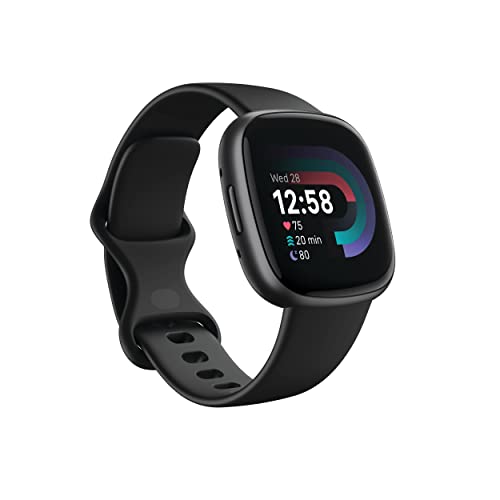
The Fitbit Versa 4 (ASIN B0B4MWCFV4) is the one pick here shaped like a conventional smartwatch, with a roughly 40 mm case and a large AMOLED display that handles apps, watch faces and notifications more comfortably than the bands. It carries built-in GPS, more than forty exercise modes, continuous heart rate, blood oxygen and sleep tracking, and battery life of six days or more.
The Versa 4 suits buyers who want the Fitbit health platform in a watch they can also wear as an everyday timepiece, with quick-reply support for Android notifications and on-wrist calls through its speaker and microphone when paired with a phone. It sits at the top of this guide’s price band, and in exchange it is the closest thing here to a flagship experience.
Sleep tracking deserves its own mention
Sleep is where these watches quietly justify themselves, because the data only exists if the watch is on your wrist at night — and that is exactly where long battery life and light weight pay off. All four track sleep duration and stages and produce a morning summary; the Fitbits add a sleep score and track skin temperature variation overnight, while the Bip 6 covers stages, breathing quality during sleep and naps in its Zepp app. The Inspire 3 is the most comfortable sleeper here thanks to its slim band shape, and the Bip 6’s two-week battery means sleep tracking never competes with charging time. If sleep insight is your main reason for buying, prioritise the watches you will genuinely forget you are wearing.
How these watches handle notifications and calls
Everyday smart features are consistent across the four: all show calls, texts and app notifications from a paired phone, all control music playing on the phone, and all include timers, alarms, weather and find-my-phone tools. Android users can send quick replies to texts from the Fitbit models; iPhone users can read notifications on all four but reply handling is more limited across the category. The Versa 4 is the only pick here with a speaker and microphone for taking a call on the wrist. None of the four has its own cellular connection, so every connected feature depends on the phone being within Bluetooth range — a fair limitation at this level, and one worth knowing before you buy if you hoped to leave the phone at home entirely.
Which one fits you
Choose the Amazfit Bip 6 if battery life and screen size matter most and you are happy tracking runs with your phone along. Choose the Inspire 3 for the lightest, most discreet option with long battery life. Choose the Charge 6 if you run or ride without your phone and want the ECG and stress features. Choose the Versa 4 if you want a proper watch shape with built-in GPS and the fullest Fitbit experience.
With all four, confirm on the product page that the colour and band size in the listing title match what you intend to order, since these watches are each sold in several variants with their own pages. It is also worth checking that the listing is for the current generation of the model — Fitbit and Amazfit both keep earlier generations in circulation alongside the new ones, and the product title and model name on the page are the reliable way to tell them apart before the box arrives.
Disclosure: As an Amazon Associate, this site may earn from qualifying purchases made through links in this article, at no additional cost to you.