Key takeaways
- The best quiet lawn mowers keep noise down without giving up power. Our November 2026 guide compares battery mowers by sound level, deck size and runtime.
A quiet mower changes the whole feel of yard work: you can cut the grass early on a weekend without waking the house, hear the birds while you work, and finish the lawn without your ears ringing. Battery mowers lead the way here, since an electric motor hums where a gas engine roars, and the best of them cut cleanly through normal grass. The trick is finding one that stays quiet while still handling thick patches and a full yard on a single charge.


This guide covers four battery mowers sold on Amazon US, chosen from the names and specifications shown on their Amazon product pages, including the sound levels each listing publishes. Two come from WORX, one from Greenworks and one from Ryobi, spanning 13-inch decks for small yards up to a 20-inch deck for larger lawns. Whether you mow a small city plot or a suburban yard, one of these four should keep the peace.
Quick Picks
As an Amazon Associate we earn from qualifying purchases
| Product | Best for | Key spec from title |
|---|---|---|
| WORX WG779 40V 14-Inch | Small yards and early mowing | 40V, 14-inch deck, 88 dBA |
| WORX WG743 40V 17-Inch | Mid-size lawns with thicker grass | 40V, 17-inch deck, 89 dBA |
| Greenworks 24V 13-Inch Brushless | Lightweight mowing in tight spaces | 24V, 13-inch brushless motor |
| Ryobi 40V 20-Inch Whisper-Quiet | Larger lawns needing a wide cut | 40V, 20-inch Whisper-Quiet |
How to Choose
Published Sound Level
Manufacturers publish sound levels in decibels, and a few decibels make a real difference because the scale is logarithmic. A mower listed at 88 dBA is noticeably quieter than a gas mower in the mid-90s, and a whisper-quiet model can sit lower still. Compare the published figures on the product pages rather than trusting the word quiet in the title, and remember that cutting thick grass raises the noise above the figure measured on light turf. If your main goal is mowing early without disturbing neighbours, the published number is the first thing to check. Treat a missing figure as a warning sign, since a maker that measures its sound level usually publishes it.
Battery Voltage and Runtime
Voltage hints at cutting power, while battery capacity decides how long the mower runs before it needs a charge. A 40V system handles thicker grass better than a 24V one, but it also weighs more and costs more to add a spare battery. Think about your lawn size: a small yard may run fine on one 24V battery, while a larger lawn may need a 40V mower with a second battery on the charger. Check whether the listing includes the battery and charger, because a bare tool looks cheaper until you add them. A battery that fits other tools in the same brand means one charger and one set of spares for the whole shed.
Deck Size and Manoeuvrability
Deck size decides how many passes you need and how easily the mower turns around beds and trees. A 13-inch deck slips through narrow gaps and stores in a small shed, but it takes many passes on a big lawn. A 20-inch deck covers open ground fast, though it is heavier to push and harder to turn in tight corners. Measure your widest open stretch and your narrowest gap, then pick the deck that fits both. For most suburban yards, a 17-inch deck is a practical middle ground. Bigger decks cut the number of passes but weigh more and turn less easily.
Cutting Height and Mulching
A quiet mower still needs to cut well, so look at the cutting-height range and whether the deck mulches, bags or side-discharges. A mower with several height settings lets you cut high in summer drought and lower in spring growth, which keeps the lawn healthier. Mulching returns clippings to the soil, so you skip the bagging step and feed the turf at the same time. Check the listing for the number of height positions and which discharge options are included in the box. A mower that bags as well as mulches gives you a tidy option for the first spring cut, when clippings are heavy.
The 4 Best Options
WORX WG779 40V 14-Inch
The WORX WG779 is a compact 40V mower that suits small yards where quiet matters most. Its 14-inch deck fits through gates and around beds, and the published 88 dBA sound level sits well below a gas mower, so early-morning mowing stays neighbour-friendly. Two 20V batteries combine into a 40V system, which gives the motor enough power for normal grass without the weight of a larger deck. The mower folds for storage, which helps when shed space is tight. The folding handle also shortens the mower for storage against a wall, which helps in a crowded shed.
- Specs: 40V battery system; 14-inch cutting deck; 88 dBA published sound level; 2-in-1 mulch and bag
- Best for: Small yards where a compact, quiet mower is the priority
- Watch out for: The 14-inch deck takes many passes on a large lawn, and thick grass drains the batteries faster
WORX WG743 40V 17-Inch
The WORX WG743 steps up to a 17-inch deck while keeping the same 40V battery system, which makes it a better fit for mid-size lawns. Its published 89 dBA sound level stays well under gas-mower territory, and the wider deck cuts the number of passes on open ground. The mower handles thicker grass better than its smaller sibling, though very tall growth still calls for a first pass at a higher setting. If your lawn is too big for a 14-inch deck but too small for a 20-inch one, this is the middle ground. The wider deck leaves a tidier finish on open ground.
- Specs: 40V battery system; 17-inch cutting deck; 89 dBA published sound level; mulching and bagging
- Best for: Mid-size lawns that need a wider cut without much more noise
- Watch out for: The wider deck is heavier to turn in tight corners, and a second battery helps on larger lawns
Greenworks 24V 13-Inch Brushless
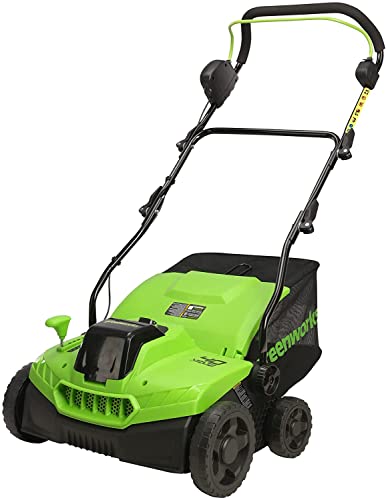
The Greenworks 24V 13-inch mower is the lightest pick in this guide, built around a brushless motor that runs efficiently and quietly. Its small deck slips between beds and along fences, and the whole mower is easy to lift into a car or carry up steps. The 24V battery keeps the weight down, which suits smaller yards and anyone who finds a 40V mower too heavy to push. For a small city plot or a townhouse lawn, this mower covers the ground without fuss. The small deck also fits between raised beds where a wider mower cannot reach at all.
- Specs: 24V battery system; 13-inch cutting deck; brushless motor; lightweight design
- Best for: Small yards and anyone who wants the lightest mower to push
- Watch out for: The 24V battery suits light grass best, and the small deck means more passes on bigger lawns
Ryobi 40V 20-Inch Whisper-Quiet

The Ryobi 40V 20-inch mower is the wide-deck pick in this guide, and its Whisper-Quiet design is aimed squarely at buyers who want the lowest noise on a larger lawn. The 20-inch deck covers open ground quickly, and the 40V battery gives the motor the power to keep the blades spinning through thicker patches. A single-lever height adjustment makes it easy to change cutting height as the season changes. For a suburban yard where a small deck would take all afternoon, this mower finishes the job sooner and quieter. The wide deck also means fewer turns on a rectangular lawn.
- Specs: 40V battery system; 20-inch cutting deck; Whisper-Quiet design; single-lever height adjustment
- Best for: Larger lawns where a wide, quiet cut finishes sooner
- Watch out for: The 20-inch deck is the heaviest to push here, and it needs more storage space than the compact models
Which One Fits Your Situation
Mowing Early Without Waking Anyone
If you like to mow before the day heats up, the published sound level matters more than anything else. The WORX WG779 at 88 dBA and the Ryobi Whisper-Quiet model are the strongest choices here, since both sit well below gas-mower noise. Mow at a higher setting on the first pass so the motor does not strain, and keep the blades sharp.
A Small City or Townhouse Yard
A small yard with gates, beds and paths calls for a compact mower that turns easily and stores in a tight space. The Greenworks 13-inch brushless mower and the WORX WG779 both fit through a standard gate and fold away when the job is done. Their light weight makes them easy to carry up steps or lift into a shed. Skip the 20-inch deck here: it will spend more time turning than cutting.
A Mid-Size Suburban Lawn
A mid-size lawn needs a deck wide enough to finish in a reasonable time, but not so wide that turning around trees becomes a chore. The WORX WG743 with its 17-inch deck is the natural fit, covering open ground faster than the compact models while staying easy to push. Keep a second battery on the charger if your lawn takes more than one charge to finish, and mow in straight lines so the stripes stay even.
Thick Grass After Rain
Grass grows fast after rain, and a quiet mower needs enough power to cut it without bogging down. The Ryobi 40V 20-inch mower and the WORX WG743 both carry 40V systems that handle thicker growth better than a 24V mower. Raise the cutting height for the first pass, let the lawn dry a little, then cut again at your normal height. Never force a battery mower through tall, wet grass in one low pass.
Common Mistakes
- Buying on the word quiet alone without checking the published decibel figure on the product page
- Choosing a 13-inch deck for a large lawn, then spending twice as long mowing every week
- Running a single battery flat mid-lawn with no spare charged and ready to swap in
- Cutting wet, tall grass at the lowest setting, which strains the motor and raises the noise
- Letting the blades dull, which makes the mower tear grass and work harder than it should
Frequently Asked Questions
How quiet is a battery lawn mower compared with gas?
A battery mower typically publishes a sound level in the high 80s dBA, while a gas mower often sits in the mid-90s or higher, and that gap is easy to hear because the decibel scale is logarithmic. The WORX models in this guide publish 88 and 89 dBA, which is noticeably calmer than a gas engine.
Can a quiet mower handle thick grass?
Yes, if it has enough voltage and you mow at the right height. A 40V mower cuts thicker grass more comfortably than a 24V one, and raising the deck for a first pass keeps the motor from bogging down. Mow when the grass is dry, and avoid forcing the mower through tall, wet growth in a single low pass.
What size deck do I need for my lawn?
A 13-inch deck suits a small yard with gates and beds, a 17-inch deck fits most mid-size suburban lawns, and a 20-inch deck covers larger open ground fastest. Measure your narrowest gap first: if the deck cannot fit through the gate, the mower cannot reach the back yard. Bigger decks cut passes but weigh more and turn less easily.
Does a quiet mower need a spare battery?
It depends on your lawn size. A small yard usually finishes on one charge, while a larger lawn may need a second battery swapped in partway through. Check the runtime the listing describes and keep a spare on the charger if your lawn is near the limit. A spare battery also helps when the grass is thick after rain.