Our Short List of 3
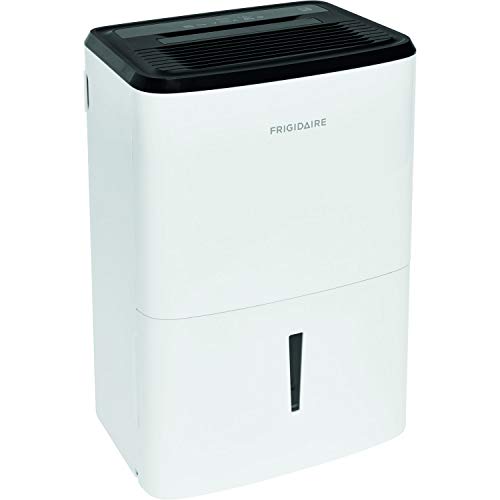
- Capacity: 50 pints per day under the current Department of Energy standard, as rated by the maker
- Tank: 16.9 pints, per the maker’s specification sheet
- Drainage: bucket, or continuous gravity drain connection; no built-in pump
- Fan: 3 speeds; maker-stated noise of 47 dB on the low setting

- Capacity: 50 pints per day at 80 degrees Fahrenheit and 60 percent humidity, per the maker; a 120-pint maximum is stated at 95 degrees and 90 percent humidity
- Coverage: up to 7,000 square feet, as stated by the maker
- Tank: 1.6 gallons
- Drainage: bucket, or gravity drain hose connection; no built-in pump
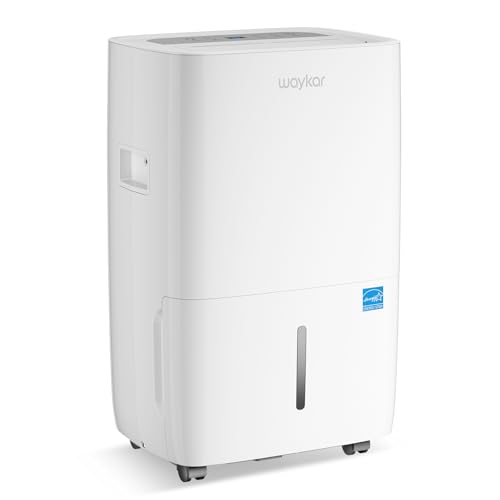
- Capacity: 80 pints per day at 95 degrees Fahrenheit and 90 percent humidity, per the maker; about 25 pints per day under current federal test conditions, per the maker’s manual
- Coverage: up to 5,000 square feet, as stated by the maker
- Tank: 1.14 gallons
- Drainage: bucket, or gravity drainage through the included drain hose; no built-in pump
All 4 Picks at a Glance
| Product | Specs | Action |
|---|---|---|
| Frigidaire FFAD5033W1 |
| Check price on Amazon |
| hOmeLabs HME1003 |
| Check price on Amazon |
| Waykar JD025CE-80 |
| Check price on Amazon |
 hOmeLabs HME1004 |
| Check price on Amazon |
Key takeaways
- Compare the best dehumidifiers for basements and large rooms by pint capacity, drainage options, tank size and maker-stated coverage, sizing explained.
A basement that stays damp feels clammy, smells musty and leaves cardboard boxes, stored clothes and wood furniture sitting in moist air for months at a time. A properly sized compressor dehumidifier is the standard fix: it pulls water out of the air every day, holds the room at the humidity level set on its controls, and either collects the water in a tank or sends it straight to a drain so it can run unattended.
The five models below are full-size home dehumidifiers built for basements and large rooms, not the small desktop units sold for closets. They differ in rated capacity, in whether they include a built-in pump, and in how their makers state coverage, so the guide explains the rating standards first and then compares each machine on the figures its maker publishes.
As an Amazon Associate, we earn from qualifying purchases.
Quick answer
For most basements, a model rated at 50 pints per day under the current United States Department of Energy test standard is the right starting point. The Frigidaire FFAD5033W1 and the GE APYR50LC cover that brief, and the GE adds a built-in pump for basements without a floor drain. Very damp open spaces suit the higher-output Waykar JD025CE-80, and the two hOmeLabs models add Wi-Fi control.
How to choose a dehumidifier
Start with the pint rating, and check which test produced it. Capacity is stated in pints of water removed per day, but the number only means something alongside its test conditions. The current Department of Energy standard tests at 65 degrees Fahrenheit and 60 percent relative humidity, and it rates machines lower than the older industry test, which ran at 80 degrees Fahrenheit and 60 percent relative humidity. A machine sold as a 70-pint model under the old test is typically rated at 50 pints under the current one, so the two figures describe similar hardware. Some makers also headline a maximum figure measured at 95 degrees Fahrenheit and 90 percent relative humidity. That number is real only in a hot, saturated room and cannot be compared with a rating from either standard test. Always compare like with like.
Treat coverage figures as maker statements. The square footage on a box is the maker’s own claim, reached under the maker’s chosen conditions, and there is no single shared method behind the numbers. A very wet basement, one with an open sump or water seeping through a wall, needs more capacity than the same floor area in a merely humid house. Use the coverage figure as a rough guide, and size up when the space is open-plan or persistently wet.
Decide how the water leaves. Every model here can collect water in its own tank, and the tank size decides how often it needs emptying on bucket duty. A gravity drain connection lets the machine empty itself through a hose into a floor drain, which suits most finished basements. A built-in pump pushes water upward to a sink or out through a basement window, which is the option to look for when no floor drain is reachable. Pump and hose arrangements are per maker, so check what each model includes before assuming a hose is in the box.
Set a target and leave the machine to hold it. A built-in humidistat lets the machine cycle on and off around a chosen level; many owners aim for somewhere in the range of 30 to 50 percent relative humidity for storage spaces. Energy Star status is worth having on a machine that may run daily for months, and in this guide it is reported only where the maker states it.
Know what a dehumidifier cannot do. A dehumidifier manages moisture in the air. It does not remediate mold that is already growing, and it is not a substitute for fixing leaks, grading soil away from the foundation or sealing a wet wall. Visible mold growth is a cleanup job in its own right, separate from humidity control.
Frigidaire FFAD5033W1
- Capacity: 50 pints per day under the current Department of Energy standard, as rated by the maker
- Tank: 16.9 pints, per the maker’s specification sheet
- Drainage: bucket, or continuous gravity drain connection; no built-in pump
- Fan: 3 speeds; maker-stated noise of 47 dB on the low setting
Frigidaire’s 50-pint model is the straightforward pick for a damp basement: a current-standard capacity rating, a reasonably large bucket and a continuous drain connection for set-and-forget running. The maker publishes a full specification sheet for this model, including fan noise figures, which makes it one of the easier machines to compare honestly. It has no built-in pump, so continuous drainage depends on a floor drain within hose reach.
GE APYR50LC
The GE APYR50LC answers the most common basement problem, which is water that needs to travel upward. Its built-in pump pushes collected water through the included hose to a sink or another raised drain, so the machine does not need a floor drain nearby and the bucket becomes a backup rather than a daily chore. Capacity is in the same 50-pint class as the Frigidaire, and the maker lists the model as Energy Star. For a finished basement with a utility sink, this is the drainage arrangement that asks the least of the owner.
Specs
- Capacity: 50 pints per day, as rated by the maker
- Drainage: built-in pump with included hose; bucket and gravity drain also supported
- Tank: removable bucket with a water level indicator
- Controls: digital display with adjustable humidistat
- Features: Smart Dry mode, per the maker
- Energy Star: the maker lists this model as Energy Star
- Finish: gray
hOmeLabs HME1003
- Capacity: 50 pints per day at 80 degrees Fahrenheit and 60 percent humidity, per the maker; a 120-pint maximum is stated at 95 degrees and 90 percent humidity
- Coverage: up to 7,000 square feet, as stated by the maker
- Tank: 1.6 gallons
- Drainage: bucket, or gravity drain hose connection; no built-in pump
The HME1003 is hOmeLabs’ Wi-Fi model without a pump. Its maker rates it at 50 pints per day at 80 degrees Fahrenheit and 60 percent relative humidity, and also publishes a maximum figure of 120 pints per day measured at 95 degrees Fahrenheit and 90 percent relative humidity. Those two numbers come from different test conditions and are not comparable with each other or with current-standard ratings, so the 50-pint figure is the one to weigh. The maker states coverage of up to 7,000 square feet, the largest claim in this guide, and Wi-Fi control lets the humidity be checked and adjusted through the maker’s app.
Waykar JD025CE-80
- Capacity: 80 pints per day at 95 degrees Fahrenheit and 90 percent humidity, per the maker; about 25 pints per day under current federal test conditions, per the maker’s manual
- Coverage: up to 5,000 square feet, as stated by the maker
- Tank: 1.14 gallons
- Drainage: bucket, or gravity drainage through the included drain hose; no built-in pump
The Waykar is the high-output option here, aimed at large, openly damp spaces. Its headline figure of 80 pints per day is measured by the maker at 95 degrees Fahrenheit and 90 percent relative humidity, and the same manual gives about 62 pints per day at 86 degrees and 80 percent humidity, and roughly 25 pints per day under the current federal test conditions of 65 degrees and 60 percent humidity. Read across those conditions, it is a strong machine whose numbers simply follow the pattern described above: hotter, wetter test air always produces a bigger figure. The maker states coverage of up to 5,000 square feet and lists the model as Energy Star.
hOmeLabs HME1004
- Capacity: 50 pints per day at 80 degrees Fahrenheit and 60 percent humidity, per the maker; a 120-pint maximum is stated at 95 degrees and 90 percent humidity
- Coverage: up to 7,000 square feet, as stated by the maker
- Tank: 1.6 gallons
- Drainage: built-in pump with included pump hose; gravity hose and bucket also supported
The HME1004 takes the same hOmeLabs platform as the model above and adds the one feature basement owners ask for most: a built-in pump, with a pump hose included, so water can be sent up to a sink or out of a window instead of relying on a floor drain. The ratings need the same care as its sibling’s: the maker states 50 pints per day at 80 degrees Fahrenheit and 60 percent humidity, with a 120-pint maximum at 95 degrees and 90 percent humidity, and neither figure comes from the current federal test. Coverage is stated by the maker at up to 7,000 square feet, and Wi-Fi control is built in.
How these compare with the alternatives
Smaller thermoelectric units, the quiet boxes sold for closets and single bedrooms, remove moisture in ounces rather than pints and are quickly overwhelmed by a basement; they belong in enclosed storage, not open damp rooms. Desiccant dehumidifiers work well in cold spaces where compressor models lose efficiency, but typical home desiccant units are sized for single rooms rather than whole basements. A whole-house dehumidifier installed in ductwork covers the largest areas and needs no emptying, at the cost of professional installation and a permanent place in the mechanical room. Commercial restoration machines out-dry everything here and are built for flood cleanup rather than everyday humidity control. For a typical home basement, the portable compressor models in this guide remain the practical middle ground.
FAQ
What size dehumidifier does a basement need?
Most home basements are served by a model rated around 50 pints per day under the current Department of Energy test standard. A small, only slightly damp basement can manage with less, while a large, open and persistently wet one may need a higher-output model. Check which test standard produced any rating before comparing two machines, because the current standard rates the same hardware lower than the old one did.
Why do two dehumidifiers with the same pint rating perform differently?
Because the pint figure depends on the temperature and humidity of the test air. The current federal test runs at 65 degrees Fahrenheit and 60 percent relative humidity, the older test ran warmer, and some makers quote maximums measured in very hot, saturated air. The same machine earns a much larger number under hotter, wetter conditions, so ratings are only comparable when the test conditions match.
Is a built-in pump worth having?
Only if the drainage geometry needs it. A pump matters when there is no floor drain within reach and the water has to rise to a sink, a laundry standpipe or a window. Where a floor drain sits nearby, a simple gravity hose does the same job continuously, and the bucket alone is workable if someone is willing to empty it regularly.
Will a dehumidifier fix a mold problem?
No. A dehumidifier lowers airborne moisture and holds a room at a set humidity level, which is moisture management, not mold remediation. Growth that is already present has to be cleaned up separately, and the water source behind it, such as a leak or seepage through a wall, has to be fixed at the source. Drying the air without addressing either will not resolve an existing problem.
Final verdict
Start with drainage, because it decides which of these machines fits a given basement. With a floor drain in reach, the Frigidaire FFAD5033W1 is the plain, well-documented choice, and the hOmeLabs HME1003 adds Wi-Fi control on the same gravity-drain basis. Without a floor drain, the GE APYR50LC and the hOmeLabs HME1004 earn their place with built-in pumps. For the largest and wettest open spaces, the Waykar JD025CE-80 brings the most output, provided its figures are read under the test conditions its maker used. In every case, compare pint ratings only within the same test standard, and treat coverage numbers as the makers’ own statements.
Product and ASIN Reference
| Product | ASIN |
|---|---|
| Frigidaire FFAD5033W1 50 Pint Dehumidifier | B07Z5PY294 |
| GE APYR50LC 50 Pint Dehumidifier with Built-in Pump | B0C6L8FDRC |
| hOmeLabs HME1003 50 Pint Wi-Fi Dehumidifier | B0D1H9DXJZ |
| Waykar JD025CE-80 80 Pint Dehumidifier | B0B5V2YZPZ |
| hOmeLabs HME1004 50 Pint Wi-Fi Dehumidifier with Pump | B0D1HMXQTB |