Our Short List of 3

- Built-in stitches: 27, per Brother
- Buttonhole: one-step, auto-size, per Brother
- Included feet: 6 quick-change feet, including buttonhole, zipper, zigzag, narrow hemmer, blind stitch, and button sewing feet, per Brother
- Bobbin: Quick-Set top drop-in, per Brother
- Built-in stitches: 70, per Brother
- Buttonholes: 7 styles, one-step auto-size, per Brother
- Included feet: 10, including a walking foot and quilting foot, per Brother
- Display: LCD, per Brother
- Built-in stitches: 12, per Janome
- Buttonhole: four-step, per Janome
- Bobbin: front-loading vertical oscillating hook, Class 15, per Janome
- Feed: five-piece feed dog with drop feed, per Janome
All 4 Picks at a Glance
| Product | Specs | Action |
|---|---|---|
| Brother XM2701 |
| Check price on Amazon |
| Brother CS7000X |
| Check price on Amazon |
| Janome 2212 |
| Check price on Amazon |
 Juki HZL-F300 |
| Check price on Amazon |
Key takeaways
- Compare five verified sewing machines from Brother, SINGER, Janome and Juki, with maker specs on stitches, speed, included feet and weight for any level.
A sewing machine is one of those tools that can sit unused for months and then become essential the moment a hem rips, a curtain needs shortening, or a quilting project takes over the dining table. The five machines in this guide cover the main ways people actually sew at home: simple mechanical models with dials, computerized machines that select stitches on a screen, a heavy duty model built for thick fabric, and a premium computerized machine with a long feature list.
Each machine below was checked against its maker’s own specifications, so the stitch counts, speeds, weights, and included accessories quoted here are the figures the manufacturers publish, not storefront marketing. The right pick depends less on the longest feature list and more on the kind of sewing you plan to do, the fabrics you reach for most, and how much automation you want between you and the needle.
As an Amazon Associate, we earn from qualifying purchases.
Quick answer
For most beginners, the Brother XM2701 is the easiest starting point, with 27 stitches and an automatic needle threader in a light frame. The Brother CS7000X adds computerized controls, a wide table, and a walking foot for quilters. The SINGER Heavy Duty 4452 suits thick fabrics, the Janome 2212 keeps things purely mechanical, and the Juki HZL-F300 is the premium step up.
How to choose
Start with the control style. Mechanical machines like the Janome 2212 use dials to pick a stitch and set its length and width, which keeps the controls visible and the machine simple to maintain. Computerized machines like the Brother CS7000X and Juki HZL-F300 select stitches electronically, often adding automatic buttonholes, needle positioning, and speed control. Neither style is automatically better; the difference is how you prefer to work.
Next, look at the stitch library with some skepticism. Every stitch count, sewing speed, and throat or work-area figure in this guide is stated the way the maker states it, and makers count differently: SINGER quotes stitch applications, Juki quotes stitch patterns, and Brother quotes built-in stitches. A large number usually means decorative variety rather than stronger sewing, so compare the utility stitches, buttonhole style, and included feet before the headline total.
Fabric plans matter more than stitch totals. If denim, canvas, or layered quilts are on your list, look for a metal frame, an extra-high presser foot lift, and the heavy needle sizes the maker supports. For mostly light cotton, linen, and repairs, a lighter machine is easier to store and carry to a class or a friend’s house.
Safety basics apply to every machine here. Keep fingers clear of the needle area while sewing, and unplug the machine before threading it, changing a needle, or cleaning around the bobbin area, as the makers’ manuals direct. A sewing machine is not a toy, so young users should sew only with adult supervision, following the maker’s guidance. Finally, use the needle type and size the maker specifies for each fabric: a sharp universal needle for wovens, a ballpoint for knits, and a heavy duty needle for denim, because the wrong needle causes more skipped stitches than any other single mistake.
Brother XM2701
- Built-in stitches: 27, per Brother
- Buttonhole: one-step, auto-size, per Brother
- Included feet: 6 quick-change feet, including buttonhole, zipper, zigzag, narrow hemmer, blind stitch, and button sewing feet, per Brother
- Bobbin: Quick-Set top drop-in, per Brother
The XM2701 is Brother’s long-running answer for new sewists who want a full-size machine that stays approachable. Stitch selection is a single dial covering 27 unique built-in stitches, including utility, decorative, and quilting stitches, plus an automatic one-step buttonhole that sizes itself to your button. The automatic needle threader and the jam-resistant Quick-Set top drop-in bobbin remove the two fiddliest parts of setup, and the free arm handles cuffs, sleeves, and pant legs once the accessory compartment slides off.
Who it’s for: beginners learning the basics, and anyone who wants a light second machine for mending and simple garments. Who should skip: sewists planning thick denim projects or wide quilts, who will want a stronger frame and more work space.
Brother CS7000X
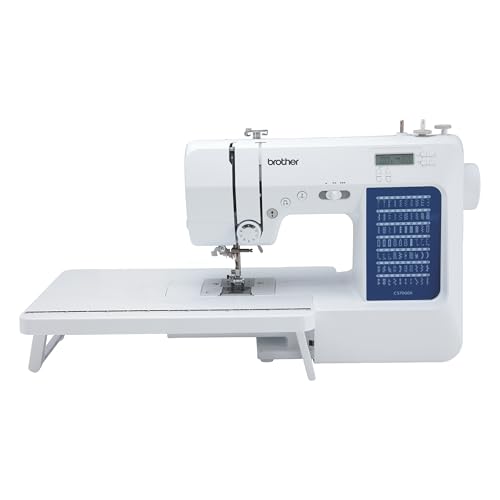
- Built-in stitches: 70, per Brother
- Buttonholes: 7 styles, one-step auto-size, per Brother
- Included feet: 10, including a walking foot and quilting foot, per Brother
- Display: LCD, per Brother
The CS7000X moves the same beginner-friendly formula into a computerized machine. An LCD display and push-button controls handle stitch selection across 70 built-in stitches, including seven styles of one-step, auto-size buttonholes. Brother includes a detachable wide table for larger projects and a walking foot among the 10 included feet, two additions quilters usually have to buy separately. A speed slider, needle up/down positioning, and a protective hard case round out a package aimed at sewists who expect their projects to grow.
Who it’s for: beginners who want room to grow, and quilters who value the wide table and walking foot in the box. Who should skip: sewists who prefer dials to screens, or anyone sewing heavy upholstery fabrics most of the time.
SINGER Heavy Duty 4452
The 4452 is the workhorse of this group. SINGER builds it on a full metal frame with a stronger motor rated for enhanced piercing power, and lists a top speed of 1,100 stitches per minute, the fastest figure here as the makers state them. Its 32 built-in stitches produce 110 stitch applications, and the included accessory kit is unusually complete: six presser feet including an even feed/walking foot and a non-stick foot for vinyl and leather-look fabrics, plus heavy duty needles in the box. A one-step buttonhole, top drop-in bobbin with a clear cover, built-in needle threader, and LED lighting keep daily use simple.
Specs
- Built-in stitches: 32, giving 110 stitch applications, per SINGER
- Maximum speed: 1,100 stitches per minute, per SINGER
- Frame: full metal, per SINGER
- Buttonhole: one-step, per SINGER
- Included feet: 6, including even feed/walking and non-stick feet, per SINGER
- Weight: 14.6 pounds, per SINGER
Who it’s for: sewists working with denim, canvas, and layered projects who want mechanical dials and a metal frame. Who should skip: sewists who want computerized stitch selection, an automatic thread cutter, or a wide quilting table included.
Janome 2212
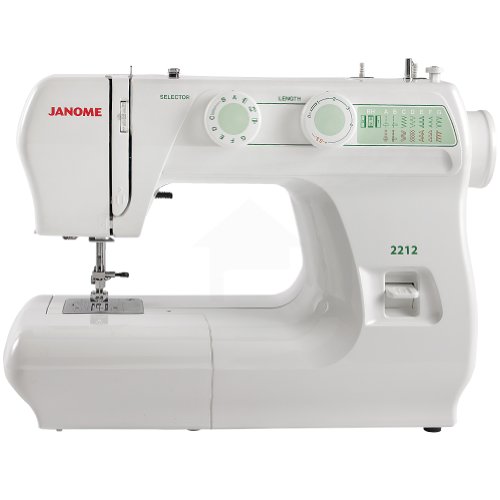
- Built-in stitches: 12, per Janome
- Buttonhole: four-step, per Janome
- Bobbin: front-loading vertical oscillating hook, Class 15, per Janome
- Feed: five-piece feed dog with drop feed, per Janome
The 2212 is the purist’s pick: a fully mechanical machine with a stitch selection dial, a length dial, and nothing electronic to configure. Janome fits 12 built-in stitches, a four-step buttonhole, and a front-loading vertical oscillating hook bobbin system, the same style used on generations of classroom machines. The five-piece feed dog, drop feed for free-motion work and darning, extra-high presser foot lift, and snap-on presser feet cover the fundamentals well, and the free arm converts it for cuffs and sleeves.
Who it’s for: beginners who want dials instead of menus, sewists maintaining a simple second machine, and anyone who values mechanical repairability. Who should skip: sewists who want an automatic needle threader, one-step buttonholes, or a large decorative stitch library.
Juki HZL-F300
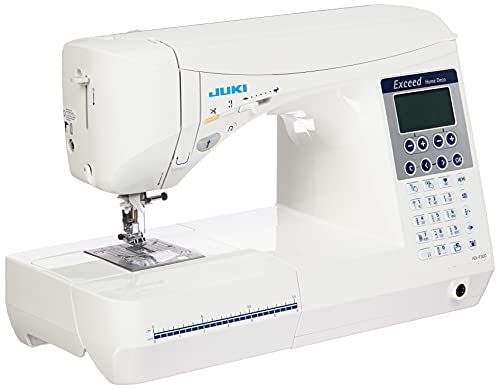
- Stitch patterns: 106, plus 3 fonts, per Juki
- Buttonholes: 16, automatic with electronic sensor, per Juki
- Feed system: box feed, per Juki
- Thread cutter: automatic, per Juki
The HZL-F300 is the premium machine in this guide, from Juki’s Exceed line. It offers 106 stitch patterns and three fonts for lettering, 16 automatic buttonholes formed with an electronic sensor, and Juki’s box feed system, which the maker designed to move fabric evenly and reduce shifting on long seams. An automatic thread cutter trims both threads at the press of a button, the needle threader is automatic, and the control panel uses an LCD with a keypad for direct pattern entry. At 25 pounds it is a stay-on-the-table machine rather than a portable one.
Who it’s for: experienced sewists and quilters who sew often and want precise feeding, fast buttonholes, and an automatic thread cutter. Who should skip: beginners on a starter budget, and anyone who needs to carry the machine to classes or store it in a closet.
Comparing the five
The two Brothers split the beginner market: the XM2701 keeps controls on a dial and the weight low, while the CS7000X adds a screen, more stitches, and quilting hardware in the box. The SINGER 4452 trades decorative variety for a metal frame and the strongest piercing power claim of the group, and the Janome 2212 strips the concept back to dials and a front-loading bobbin. The Juki HZL-F300 sits a class above on feeding precision, buttonhole automation, and convenience features, at roughly double the weight of the lightest machines here.
FAQ
Is a mechanical or computerized machine better for a beginner?
Both work. Mechanical machines like the Janome 2212 and Brother XM2701 show every setting on a dial, which some learners find clearer. Computerized machines like the CS7000X add automatic buttonholes and speed control that forgive early mistakes. Choose based on whether you prefer dials or a display.
What bobbins and needles should I buy with my machine?
Buy the bobbin class your maker specifies: the Janome 2212 and SINGER 4452 use Class 15 bobbins, while the Brother machines use Brother’s SA156 Class 15-style drop-in bobbins listed in their manuals. Match needles to fabric using the maker’s chart, and replace needles regularly, since a dull needle causes most stitch problems.
Can these machines sew denim and other thick fabrics?
The SINGER 4452 is the natural pick for thick fabrics, with its metal frame and heavy duty needles included. The other machines can hem a pair of jeans with the needle size the maker specifies for denim, but frequent multi-layer work suits the 4452 or the Juki best.
How much work space do I need for quilting?
Space to the right of the needle matters most. The CS7000X includes a wide table for this reason, and Juki offers one for the HZL-F300 as an optional accessory. On smaller machines, quilting is realistic for baby quilts and throws; large bed quilts are easier with the extra table surface.
Final verdict
Buy the Brother XM2701 if you are learning and want the gentlest setup. Choose the Brother CS7000X if quilting is on your horizon and you want the table and walking foot included. Pick the SINGER Heavy Duty 4452 for denim, canvas, and repairs on thick fabric, the Janome 2212 for simple mechanical reliability, and the Juki HZL-F300 if sewing is a weekly habit and you want the most capable machine here.
Product and ASIN Reference
| Product | ASIN |
|---|---|
| Brother XM2701 | B00JBKVN8S |
| Brother CS7000X | B08BH5GTNC |
| SINGER Heavy Duty 4452 | B00OZWX100 |
| Janome 2212 | B003Y5CEJS |
| Juki HZL-F300 | B004C04YIS |