Our Short List of 3
All 4 Picks at a Glance
| Product | Specs | Action |
|---|---|---|
 SRAM PC-1 — ASIN B0013FGI48 | Check price on Amazon | |
 Odyssey Bluebird — ASIN B003BC9P9Q | Check price on Amazon | |
 KMC Z1 — ASIN B07J2TXG64 | Check price on Amazon | |
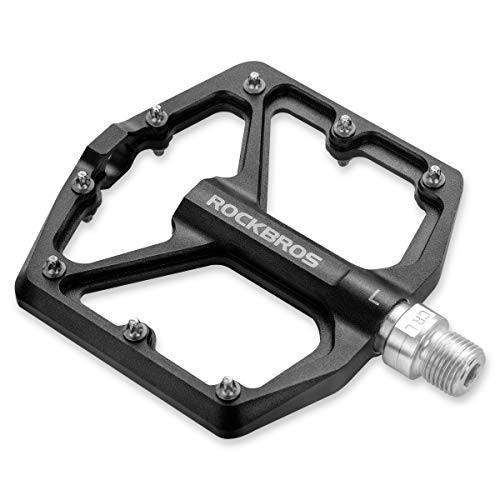 ROCKBROS Aluminium Platform Pedals — ASIN B08FFHW2PV | Check price on Amazon |
Key takeaways
- The best BMX bike parts start with the highest-wear items: the chain and pedals. Compare SRAM, Odyssey and KMC chains plus platform pedals for BMX builds.
Ask a BMX rider which parts they replace most and the answer is never the frame. It is the wear items and the impact items: the chain that stretches and eventually snaps, the pedals that grind thinner on every ledge, the grips that tear. A sensible BMX parts guide therefore starts where the wear is. This article covers the two highest-turnover component groups on a BMX bike — chains and pedals — with the specific products that carry verified Amazon US listings, and it sets out the compatibility checks that decide whether a part fits your bike at all.
Note the near neighbour on this site: a dedicated guide to BMX three-piece cranksets already exists here. Cranks are deliberately excluded below so this roundup stays on the parts that guide does not cover.
Disclosure: As an Amazon Associate, this site may earn from qualifying purchases made through links in this article, at no additional cost to you.
BMX chain sizing: the one specification that matters
BMX bikes run a single-speed drivetrain with a chain sized at one-half inch pitch by one-eighth inch width, written as 1/2 x 1/8. That width is wider than a multi-speed chain, and the two are not interchangeable: a derailleur chain will skate on a BMX sprocket, and a BMX chain will not fit a geared drivetrain. Every chain below is a 1/2 x 1/8 single-speed chain.
Length is sold by link count, with 112 links covering most BMX builds. Longer chains exist for stretched frames and large sprockets. Buy at or above the length you need and remove links with a chain tool to size it — a chain can always be shortened, never lengthened. Most BMX chains join with a master link or a spring-clip connector; confirm the connector type in the box before you start, and carry a spare link in your bag, because a chain failure ends a session more completely than any other mechanical.
The chains
SRAM PC-1 — ASIN B0013FGI48
The SRAM PC-1 is the enduring everyday single-speed chain: 1/2 x 1/8 sizing, 114 links, a nickel finish that resists rust and stays bright, and SRAM’s SnapLock connector, which joins the chain without a pin press once the chain is threaded. Published assessments of this chain consistently describe the same ownership pattern — riders run one for years of daily use and replace it with the same chain again.
The honest caveats are about installation and intent. The SnapLock connector needs firm, correct pressure to seat, and it can fight a first-time installer; on a dirty chain the connector is also hard to spot for removal. And while the PC-1 is a superb street and everyday chain, riders who race BMX at maximum load will stretch any chain in this class sooner — racing at that level is a maintenance schedule, not a product choice. For park, street and general riding, the PC-1 is the default recommendation in this guide.
Odyssey Bluebird — ASIN B003BC9P9Q
Odyssey is a BMX-first brand, and the Bluebird is its chain for park, peg and trail riding. It is a 1/8-inch single-speed chain built with BMX abuse in mind — the riding style where the chain meets ledges, sprocket stalls and the occasional case against concrete. The Bluebird’s design centres on surviving that environment: stout plates and a construction aimed at riders whose chain is a wear item in the truest sense, replaced on condition rather than on schedule.
Choose the Bluebird if your riding is park and street with pegs, where the chain takes impacts a commuter chain never sees. Riders building a period-correct or purely cruising setup can save the difference and take one of the other chains here; the Bluebird earns its place under riders who grind.
KMC Z1 — ASIN B07J2TXG64
KMC makes chains for nearly every bicycle category, and the Z1 is its BMX, track and single-speed entry: 1/2 x 1/8 sizing, 112 links, alloy steel construction. KMC’s single-speed chains have a long record on vintage BMX restorations and track builds, where the priorities are a quiet, smooth run and a connector that behaves during installation.
The Z1 suits the rider who wants the trusted chain specialist’s product without moving to the brand’s heavier-duty racing lines. As with the KMC chains generally, check the box contents before installation — the master link is the component most often reported missing or mismatched across the whole single-speed chain market, and a two-minute check at the bench beats a problem at the park.
Pedals: the other wear item
Pedals on a BMX bike lead a hard life. They are platforms, grinding surfaces and landing gear in one part. The specification points are platform size — a broad platform supports the foot through tricks and landings — spindle standard, and body material. Nearly all BMX pedals thread at 9/16 inch for three-piece cranks; older one-piece cranks use 1/2 inch, and the two do not interchange. Confirm your crank type before ordering any pedal.
ROCKBROS Aluminium Platform Pedals — ASIN B08FFHW2PV
These ROCKBROS pedals are an aluminium-bodied wide platform design with sealed bearings, sold for mountain and BMX use — the crossover is genuine, because a wide flat pedal with a grippy pinned surface serves both disciplines the same way. The aluminium body takes knocks that crack basic nylon pedals, the sealed bearing system keeps the spin smooth without regular servicing, and the platform gives a planted feel for riders who move their feet constantly, as BMX riders do.
Metal pedals ask for one habit in return: shin awareness. Pinned aluminium platforms grip shoes superbly and punish shins on a slipped landing, which is why many street riders still choose nylon pedals. Choose these if durability and grip top your list and your riding keeps your feet on the pedals; choose nylon if pedal strikes are a weekly event in your sessions.
Parts deliberately not given listings here
Grips, pegs and tyres are the other classic BMX wear parts, and named favourites exist in every category — waffle-pattern grips, steel and plastic pegs, street and park tyres. This guide attaches listings only where an Amazon US record could be verified to the standard the site requires, and several well-known BMX parts could not be verified to that standard at the time of writing. They are therefore discussed in general terms: for grips, prioritise a soft compound and a flange or flangeless design matched to whether you run brakes and bar ends; for pegs, match the axle standard (14 mm rear is the modern default, with 3/8 inch common at the front) and choose plastic sleeves for park surfaces that prohibit metal. Buy those parts from BMX specialist retailers if the exact model matters to you — specialists stock the full colour and size ranges that general marketplaces often list incompletely.
Compatibility checklist
- Chain: 1/2 x 1/8 for BMX single-speed; count links against your current chain before ordering.
- Connector: confirm the master link or clip is in the box; carry a spare.
- Pedals: 9/16 inch thread for three-piece cranks, 1/2 inch for one-piece; left and right pedals thread differently — the left is reverse-threaded.
- Pegs: match axle diameter front and rear; check your local park’s rules on metal pegs.
- Sprocket and driver: a worn chain accelerates sprocket wear; if the chain has stretched badly, inspect the sprocket teeth for hooking before fitting the new chain to it.
Chain care: the maintenance that decides service life
A BMX chain’s life is set less by its brand than by its tension and lubrication. Run a chain too tight and it binds the drivetrain, loads the driver bearings and wears every tooth it touches; too loose and it slaps, derails on landings and can jam at the worst moment. The working standard is a small amount of vertical play at the midpoint of the run — enough to move the chain visibly with a finger, not enough to let it droop. Check tension at several points in the crank rotation, because sprockets are never perfectly round and every drivetrain has a tight spot; set tension at that tight spot.
Lubrication divides riders, but the mechanics are simple: the lubricant belongs inside the rollers, not on the outer plates where it collects grit into a grinding paste. Apply to the inside run of the chain, work the cranks backward to draw it in, then wipe the outside nearly dry. A chain that has stretched — measured with a checker or against a ruler, with a worn chain showing elongation across a span of links — should be replaced before it finishes wearing the sprocket and driver into matching damage. Chains are the cheapest component in the drivetrain; everything they touch costs more.
The sensible upgrade order
If you are improving a complete BMX bike part by part, the wear-driven order is: tyres and grips first, because they define the contact with ground and hands; then pedals, for the platform and bearing quality; then the chain, sized and tensioned properly; then the parts that only need replacing when they fail or limit you — sprocket, driver, bars, and eventually wheels. This guide’s listings cover the middle of that order, the parts that combine high wear with verified availability. Riders tempted to start at the glamorous end — a frame, a fork — should know that a stock bike with fresh contact points and a sound drivetrain rides better than a dream frame rolling on worn tyres and a stretched chain.
The small tool kit these jobs need
None of the parts in this guide needs a workshop. A chain tool sized for single-speed chains handles sizing and most connector work, a set of Allen keys covers pedal and cockpit hardware, and a pedal wrench — or a slim 15 mm spanner — removes pedals that Allen fittings cannot shift. Add a chain checker if you ride enough to wear chains out, because it converts replacement timing from guesswork into measurement, and keep a spare master link taped inside your bag or under the saddle. The whole kit costs less than one mid-range part and pays for itself the first time a chain snaps within walking distance of home instead of across town.
Verdict
For most BMX riders, the SRAM PC-1 (B0013FGI48) is the chain to buy: durable, rust-resistant and easy to join. Park and street riders whose chains take impacts should take the Odyssey Bluebird (B003BC9P9Q), and riders who prefer the chain specialist’s catalogue should look at the KMC Z1 (B07J2TXG64). Pair any of them with a broad, sealed-bearing platform pedal such as the ROCKBROS aluminium set (B08FFHW2PV), keep a spare master link in your bag, and the two highest-wear systems on the bike are covered.