Key takeaways
- Neck wallet vs hidden pouch compared on concealment, access, comfort and RFID blocking, with five real picks for passports, cards and backup cash.
A neck wallet hangs on a lanyard against your chest, while a hidden pouch anchors to your belt or waistband and disappears inside your clothing. Both are built to keep a passport, cards and backup cash out of a pickpocket’s reach, but they hide in different places, open at different speeds and suit different travel styles. This guide compares the two formats head to head and then walks through five real products, three neck wallets and two hidden pouches, so you can pick the stash that matches how you actually move through airports, stations and crowded streets.
The short version: choose a neck wallet if you want one organised pouch you can reach in seconds at check-in desks and ticket gates. Choose a hidden pouch if your priority is deep concealment for valuables you rarely need to touch during the day. Many experienced travellers carry both, a neck wallet for daily spending and a hidden pouch as the deep reserve.
As an Amazon Associate, we earn from qualifying purchases.
Table of Contents
- How Each Style Works
- Concealment
- Access Speed
- Capacity and Organisation
- Comfort for All-Day Wear
- Security Features
- The Neck Wallets
- The Hidden Pouches
- How to Choose
- FAQ
- Conclusion
How Each Style Works
A neck wallet is a flat pouch on an adjustable lanyard. Worn under a shirt, it rests on the chest or stomach; worn over clothing, it works like a credential holder for conferences and group tours. Most models are sized for a passport and add zippered compartments for cards, folded currency, tickets and receipts. Because the pouch hangs from the neck, gravity keeps it flat and the strap length decides how low it sits.
A hidden pouch skips the lanyard entirely. The classic design has a belt loop on the back: you thread your own belt through the loop, then tuck the pouch down inside your waistband so only the loop stays outside, hidden under your belt. Variants clip to a bra strap or underwear, or wrap around the lower leg under trousers. Nothing hangs, nothing swings, and there is no strap crossing your torso to give the game away under thin clothing.
Concealment
This is the hidden pouch’s home turf. A pouch tucked inside a waistband leaves almost no outline, because the waistband and belt already create a natural line that hides a flat pouch behind it. Leg and bra-strap pouches go further still, moving valuables away from the spots a pickpocket checks first.
A neck wallet hides well under a buttoned shirt, jacket or sweater, but the lanyard is its weak point. A thin cord can print through a light t-shirt, and the pouch itself can show as a rectangular outline in warm weather when travellers wear less. Loose, dark or layered clothing hides a neck wallet easily; a fitted summer top does not. If total invisibility matters most, the hidden pouch wins this round.
Access Speed
The neck wallet takes this round easily. Pull the lanyard, unzip, and your passport or card is in hand, which is exactly what you want at airport check-in, hotel desks and rail ticket barriers. The whole interaction takes a few seconds and can be done one-handed.
A hidden pouch is deliberately slower. Reaching it means finding a private moment, loosening your waistband or stepping aside, because fishing inside your trousers in a public queue draws the wrong kind of attention. That friction is a feature for deep storage and a flaw for daily spending. Plan to move a day of cash and one card to a regular pocket or wallet, and treat the hidden pouch as a vault, not a till.
Capacity and Organisation
Neck wallets are the organisers of the two formats. The better models split storage into two zippered compartments with inner mesh pockets and card slots, so a passport, boarding pass, cards, cash and receipts each get a place. A few are large enough to swallow a phone in the main compartment alongside travel documents.
Hidden pouches are minimal by design. Most offer one or two compartments sized for a passport and folded currency, and nothing more. That is enough for a passport, an emergency card and backup notes, which is all a deep stash should hold. If your travel style needs tickets, multiple currencies and documents sorted and reachable, the neck wallet’s layout is the better tool.
Comfort for All-Day Wear
A neck wallet concentrates its weight on the back of the neck. A loaded pouch is still light, usually only a few ounces, but on a long, hot day the strap can rub, and sweat builds where the pouch rests against the chest. Models with moisture-wicking back panels and soft, adjustable straps reduce both problems.
A hidden pouch spreads its presence along the waistband, where a belt already sits, so many travellers forget it is there. Waistband pouches can feel warm against the skin in tropical heat, and leg pouches take a day or two to get used to. On balance, travellers who dislike anything around the neck tend to prefer the waistband format, while travellers who wear dresses, skirts or belt-free outfits often find the neck wallet simpler.
Security Features
Both formats rely on the same first line of defence: being out of sight and hard to reach. Beyond concealment, look for these published features. RFID blocking linings shield contactless cards and passport chips from skimming. Wire-reinforced straps, found on anti-theft neck pouches, resist cut-and-run snatch attempts. Self-repairing or lockable zippers keep compartments closed. Rip-stop fabrics stop a small tear from becoming a lost passport.
Neither format is a safe. A determined thief who knows a pouch is there can still defeat it, which is why splitting valuables between a neck wallet, a hidden pouch and a separate bag stash remains the standard advice for high-risk destinations.
The Neck Wallets
Lewis N. Clark RFID Blocking Stash Neck Wallet
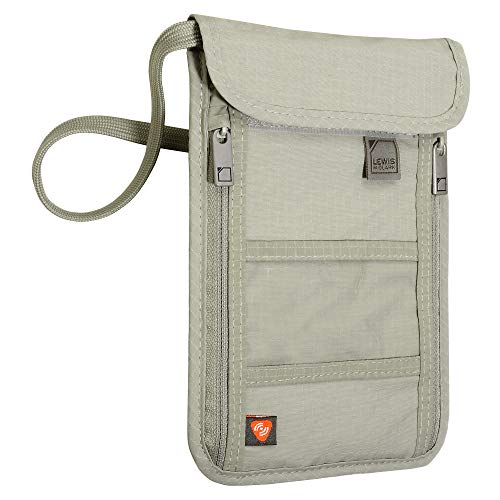
A long-running design from Lewis N. Clark, built in rip-stop nylon with an RFID blocking lining. Two zippered compartments and two inner mesh pockets sort documents from cards and cash, and the maker notes the main compartment can hold items such as a smartphone alongside passports and boarding passes. The back panel uses a moisture-wicking finish aimed at hot travel days, and the included lanyard adjusts so the pouch sits where your clothing hides it best.
Specs:
- Material: Rip-stop nylon with RFID blocking lining
- Compartments: 2 zippered compartments, 2 inner mesh pockets, 2 card slots
- Dimensions: 7.5 x 5.5 x 0.15 in
- Weight: About 1.6 oz
- Model: 1267TPE (Taupe)
- Tier: Mid-range
Pacsafe Coversafe X75 Anti-Theft RFID Blocking Neck Pouch
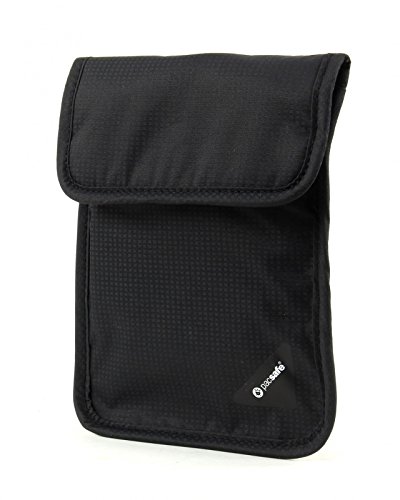
The security-first option. The X75 pairs an RFIDsafe blocking pocket, listed as meeting the US FIPS 201 standard, with a Carrysafe slashguard strap reinforced with stainless steel wire, so the strap resists being cut in a snatch attempt. The pouch itself is soft, flat and sized for a passport, and the adjustable strap drop lets you wear it on the chest or swung crossbody under a jacket.
Specs:
- Material: 75D polyester dobby
- Compartments: Zippered main compartment sized for a passport, RFID blocking pocket
- Dimensions: 6.7 x 5.3 x 0.2 in
- Weight: About 2.1 oz
- Strap: Wire-reinforced, adjustable drop of about 11 to 24.4 in
- Tier: Premium
Travelon RFID Blocking Undergarment Neck Pouch

Travelon’s undergarment line is designed to vanish under clothing, and this neck pouch follows that brief with a slim, soft build and an RFID blocking lining. It keeps the layout simple, which suits travellers who want a passport and a couple of cards hidden without bulk, and the adjustable strap lets the pouch ride high or low depending on your neckline.
Specs:
- Type: Undergarment neck pouch, worn under clothing
- RFID blocking: Yes
- Model: 12998
- Colour: Grey
- Size: One size, adjustable strap
- Tier: Budget
The Hidden Pouches
Eagle Creek Undercover RFID Hidden Pocket

Eagle Creek’s hidden pocket design threads onto your belt and tucks inside your waistband, and this updated version adds RFID blocking to the formula. The listing describes a zippered holder sized for a passport and cards, with two compartments to keep documents and currency apart. At well under an ounce of listed weight, it adds almost nothing to your belt line while moving your most important documents completely out of view.
Specs:
- Wear style: Belt loop, tucks inside the waistband
- RFID blocking: Yes
- Compartments: 2, zippered passport and card holder
- Model: EC010501 (Storm Grey)
- Listed weight: 0.48 oz
- Tier: Mid-range
Zero Grid Hidden Bra Wallet
A different hiding spot entirely. This soft nylon-spandex pouch fastens to a bra strap, underwear or a belt loop with a connector clasp and double snap closure, then sits flat against the body under clothing. Zero Grid sizes it for a snug passport fit plus cash and cards, and notes it is machine washable. It is aimed at travellers who want a secondary stash for reserve cash and a backup card, accessed only in private.
Specs:
- Material: Ultra-soft nylon-spandex
- Wear style: Clips to bra strap, underwear or belt loop
- Closure: Connector clasp with double snap
- Fits: Passport (snug), cash and cards
- Care: Machine washable
- Tier: Budget
How to Choose
Start with access. If you will open the pouch many times a day for passports, tickets and cards, pick a neck wallet. If the pouch holds a passport, emergency cash and one backup card that you hope never to touch, pick a hidden pouch.
Next, check your wardrobe. Belts and waistbands make hidden pouches effortless; belt-free outfits, dresses and swim cover-ups favour a neck wallet. Then match the security features to your route: RFID blocking is now standard on most models, while a wire-reinforced strap earns its keep in crowded transit hubs. Finally, split your valuables. Whichever format you choose, keep a second, separate stash so one loss never ends the trip.
FAQ
Is a neck wallet or a hidden pouch better for a passport?
Both protect a passport well. A neck wallet is better if you present your passport often, at airports, hotels and borders, because it is faster to reach. A hidden pouch is better for carrying a passport purely as a protected document you rarely need to show.
Can a hidden pouch replace a money belt?
A hidden pouch covers the same job for most travellers: concealing a passport, cards and backup cash under clothing. It anchors to your existing belt instead of adding a second belt around your waist, so it tends to be slimmer, though it usually carries a little less than a full-size belt.
Do neck wallets show through clothing?
They can under thin or fitted tops, where the strap and the pouch outline may print through. Under a buttoned shirt, jacket or sweater, a flat neck wallet is effectively invisible. Choosing a slim model and adjusting the strap so the pouch sits flat against the stomach helps.
Should I carry both a neck wallet and a hidden pouch?
Many travellers do. Use the neck wallet for daily documents and spending, and the hidden pouch as a deep reserve with backup cash and a spare card. Splitting valuables between two hiding spots means a single theft or loss cannot take everything.
Conclusion
There is no universal winner in the neck wallet vs hidden pouch debate, only a better match for your habits. The neck wallet is the practical organiser: fast to reach, easy to sort, and ideal for document-heavy travel days. The hidden pouch is the vault: slower to access, but as close to invisible as travel storage gets. Choose by how often you need your documents and how you dress, and consider carrying one of each so your valuables never share a single point of failure.