Key takeaways
- Travel tote vs carry on compared on size, capacity, weight and wheels, with five cabin bag picks and a clear verdict for short and long trips alike.
Short answer: pick a travel tote if you want a light, soft bag that fits under the seat as a personal item and keeps essentials within reach. Pick a wheeled carry-on if you need maximum packing space, structured protection, and wheels that take the load off your shoulder. The tote wins on weight and access; the carry-on wins on capacity and comfort over distance.
As an Amazon Associate, we earn from qualifying purchases.
Table of Contents
- Quick Verdict
- Travel Tote vs Carry-On at a Glance
- What Counts as a Personal Item vs a Carry-On
- Key Differences
- The Travel Totes
- The Wheeled Carry-Ons
- Who Should Choose a Travel Tote
- Who Should Choose a Wheeled Carry-On
- FAQ
- Conclusion
Quick Verdict
A travel tote is a soft, unstructured or lightly structured bag carried by hand or on the shoulder. Sized right, it qualifies as a personal item, slides under the seat in front of you, and weighs as little as a couple of pounds empty. A wheeled carry-on is a small suitcase, usually 21 to 22 inches tall, built to fill the overhead bin and roll through the airport on four spinner wheels.
Neither bag is better in the abstract. The tote is the right call for overnight and weekend trips, for travelers who pack light, and for anyone who wants their bag at their feet rather than in the bin. The carry-on is the right call for trips of three days or more, for heavier loads, and for travelers who would rather pull weight than carry it. Many frequent flyers eventually own both and choose per trip.
Travel Tote vs Carry-On at a Glance
| Factor | Travel Tote | Wheeled Carry-On |
|---|---|---|
| Cabin status | Usually a personal item | Carry-on, overhead bin |
| Typical size | 16 to 19 in long | 21 to 22 in tall overall |
| Typical capacity | 20 to 30 liters | 34 to 46 liters |
| Empty weight | About 1 to 2.5 lb | About 5.4 to 7 lb |
| Carrying method | Hand or shoulder | Telescopic handle and spinner wheels |
| Structure | Soft, squeezable | Hard shell or framed soft shell |
| Access in flight | Under the seat, always reachable | Overhead bin, out of reach |
| Best trip length | 1 to 3 days | 3 to 7 days |
What Counts as a Personal Item vs a Carry-On
Airlines divide cabin bags into two classes. A personal item is the smaller bag that must fit under the seat; common maximum dimensions are around 18 x 14 x 8 inches, though every airline sets its own numbers. A carry-on is the larger bag that goes in the overhead bin; common maximum dimensions are around 22 x 14 x 9 inches including wheels and handles.
A well-sized travel tote sits in the personal-item class, which matters for two reasons. First, on basic economy fares that include only a personal item, a tote is the whole luggage allowance, so its capacity has to work hard. Second, because it rides under the seat, everything in it stays reachable during the flight. A wheeled carry-on, by contrast, must meet the larger bin allowance and is usually surrendered to the overhead bin, or to gate-checking when bins fill up. Always confirm the exact limits for your airline and fare class before you fly, because a bag that passes on one carrier can fail on another.
Key Differences
Size and airline rules
The tote plays by personal-item rules, so it stays small and soft enough to compress into a sizer or under a seat. The carry-on plays by overhead-bin rules, so it is taller, deeper, and rigid enough to hold its shape when stacked. If you regularly fly airlines with strict personal-item enforcement, the tote’s footprint is its biggest advantage. If your airline includes a carry-on in the fare, the suitcase gives you far more room for the same ticket.
Capacity and packing style
Totes in this comparison hold roughly 20 to 30 liters. That suits a change or two of clothes, toiletries, a laptop, and flight essentials, especially with soft walls that bulge a little around odd shapes. Carry-ons hold roughly 34 to 46 liters in a rectangular packing bay with straps and dividers, which suits folded outfits for most of a week. Packing a tote is a matter of layering soft items; packing a carry-on is closer to loading a small dresser drawer.
Weight and carrying comfort
An empty tote can weigh under 2.5 lb, so nearly all of your weight allowance goes to your belongings. The trade-off is that every pound rides on one shoulder or in one hand, which gets old on long walks through big terminals. An empty carry-on weighs 5.4 lb or more before you pack a single shirt, but its wheels and telescopic handle move that weight to the floor. For a heavy load or a long connection, wheels win easily; for a light load and a short walk, the tote’s low empty weight wins.
Organization and access
Totes open at the top and keep everything in one flexible space, usually with slip pockets, a laptop sleeve, and sometimes a separate shoe compartment or wet pocket. That makes them excellent in-flight bags: passport, headphones, snacks, and a sweater are all an arm’s length away. Carry-ons split into two halves or a deep main bay with lid pockets and hold-down straps, which organizes a wardrobe better but is awkward to open mid-flight and impossible to reach once it is in the bin.
Protection and durability
A hard-shell carry-on shields fragile items, keeps clothes pressed flatter, and shrugs off rain and bin scrapes. A softside carry-on adds exterior pockets and a little give. A tote offers the least protection: soft walls mean soft contents, so anything breakable needs its own case. On the other hand, a tote has no wheels, handles, or zippers under tension to break, and it stores flat in a closet between trips.
The Travel Totes
LOVEVOOK Weekender Bag

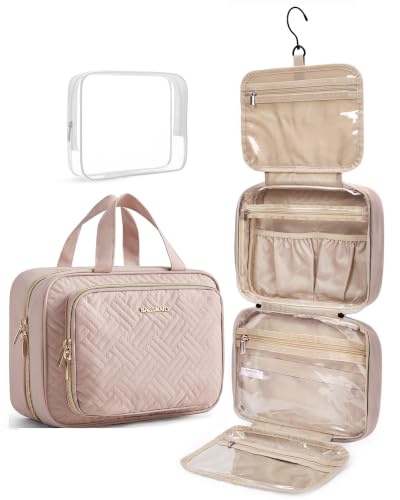
The LOVEVOOK Weekender is the largest tote here, shaped like a small duffel with tote-style carry handles. Its separate bottom shoe compartment and PVC-lined wet pocket keep shoes and damp items away from clean clothes, and a trolley sleeve lets it ride on top of a rolling suitcase when you travel with both. At 2.3 lb it stays light for its size, and the listing dimensions let it work either as an under-seat personal item or in the overhead bin.
Specs
- Type: Travel tote / weekender duffel
- Dimensions: 19 x 9 x 13.58 in
- Weight: 2.3 lb
- Material: Polyester
- Compartments: Separate shoe compartment, PVC-lined wet pocket, 5 interior pockets, back zip pocket
- Extras: Trolley sleeve, matching toiletry bag included
- Tier: Budget
BAGSMART Expandable Personal Item Travel Bag
This BAGSMART bag is built precisely around the personal-item idea. In its standard form it measures 16.5 x 7.5 x 11.8 inches with 23.5 liters of space, sized to slide under a seat. Unzip the expansion and it grows to 14.9 inches tall and about 30 liters, at which point it behaves like a small carry-on for the overhead bin. The Taslan fabric is water resistant, and the adjustable shoulder strap can be removed when you carry it by hand.
Specs
- Type: Expandable travel tote
- Dimensions: 16.5 x 7.5 x 11.8 in, expanding to 16.5 x 7.5 x 14.9 in
- Capacity: 23.5 liters standard, about 30 liters expanded
- Material: Taslan, water resistant
- Strap: Adjustable, removable shoulder strap
- Extras: Matching toiletry bag included, zipper closure
- Tier: Mid-range
BAGSMART Puffy Tote Bag

The BAGSMART Puffy Tote is the most purse-like option here: a quilted shoulder bag with a zip top, eight pockets, and a padded build that fits laptops up to 15.6 inches. At 20 liters it is the smallest bag in this comparison, which makes it a true personal item for light packers and a strong second bag alongside a checked suitcase. It is also machine washable, a rare and useful trait in a travel bag.
Specs
- Type: Quilted travel tote
- Dimensions: 15.7 x 6 x 13 in
- Capacity: 20 liters
- Material: Polyester with nylon inner material, quilted
- Organization: 8 pockets, 2 compartments
- Laptop fit: Up to 15.6 in
- Care: Machine washable
- Tier: Budget
The Wheeled Carry-Ons
Travelpro Maxlite 5 Softside Carry-On, 21-Inch

The Maxlite 5 is the capacity pick. Its 46-liter softside case expands by up to 2 inches, holds outfits for the better part of a week, and still weighs only 5.4 lb thanks to its lightweight frame. The PowerScope Lite handle locks at 38 and 42.5 inches for shorter and taller travelers, and the ECOFAB lining is made from post-consumer recycled plastic bottles. Two exterior pockets keep documents and a light jacket outside the main bay, something hard shells cannot offer.
Specs
- Type: Softside wheeled carry-on
- Case dimensions: 21 x 14 x 9 in
- Weight: 5.4 lb
- Capacity: 46 liters
- Expansion: Up to 2 in
- Handle: PowerScope Lite telescopic handle, locks at 38 in and 42.5 in
- Wheels: 4 spinner wheels
- Warranty: Limited Lifetime Coverage
- Tier: Mid-range
Samsonite Freeform Hardside Carry-On Spinner, 21-Inch

The Freeform is the protection pick. Its polycarbonate shell guards fragile contents, the recessed TSA combination lock secures the zippers, and the interior splits into two sides with cross ribbons and a divider for tidy packing. It is heavier than the Maxlite 5 at 6.5 lb and holds less at 34 liters, but it is the bag to choose when your carry-on doubles as checked luggage on a full flight and gets handled by the airline.
Specs
- Type: Hardside wheeled carry-on
- Overall dimensions: 21.25 x 15.25 x 10 in
- Packing dimensions: 19.5 x 14.5 x 10 in
- Weight: 6.5 lb
- Capacity: 34 liters
- Shell: Polycarbonate, expandable
- Wheels: 4 dual spinner wheels
- Lock: Recessed TSA combination lock
- Warranty: 10-year limited warranty
- Tier: Premium
Who Should Choose a Travel Tote
Choose a travel tote if your trips run one to three days and you pack light. Choose it if you fly basic economy fares where a personal item is the only bag included, because a well-sized tote maximizes that allowance without wheels or frames eating space. Choose it if you want your belongings under the seat and reachable all flight long. Choose it if you dislike overhead-bin struggles, or if your bag must double as a gym bag, hospital bag, or daily carry between trips. The LOVEVOOK suits tote users who pack the most, the BAGSMART Expandable suits travelers who want personal-item size with a growth option, and the BAGSMART Puffy Tote suits minimalists who travel with a laptop and a change of clothes.
Who Should Choose a Wheeled Carry-On
Choose a wheeled carry-on if your trips run three days or longer, or if you pack bulky items like shoes, jackets, and full outfits. Choose it if you have a long walk through the terminal, a heavy load, or any shoulder or back concern that makes carrying a poor idea. Choose it if you pack fragile items that need a shell, or if you want the structure of straps, dividers, and a lock. The Travelpro Maxlite 5 suits packers who count liters and want the lightest full-size option; the Samsonite Freeform suits travelers who want hard-shell protection and a lock in a carry-on size.
FAQ
Can a travel tote replace a carry-on entirely?
Yes, for short trips. A tote in the 24 to 30 liter range holds two or three days of clothing plus toiletries and a laptop, which covers most weekend travel. For trips of four days or more, or for bulky winter clothing, most travelers will run out of room and be better served by a wheeled carry-on.
Does a travel tote count as a personal item?
Usually, provided it fits your airline’s personal-item dimensions and slides fully under the seat. Totes around 16 to 18 inches long with a slim profile are the safest bet. Larger weekender-style totes may be treated as carry-ons on strict airlines, so check the size limits for your fare before you rely on one as your only bag.
Which bag is better for a bad back or shoulders?
The wheeled carry-on. A tote puts the full packed weight on one shoulder or arm, while a spinner carry-on transfers the load to the floor and rolls beside you with a light pull. If you must use a tote, keep it light and switch shoulders often.
Can I bring both a tote and a carry-on?
On most standard fares, yes: the tote travels as your personal item and the carry-on goes in the overhead bin, which is exactly how the two bag types complement each other. On basic economy fares that include only a personal item, the tote alone is allowed, so it has to do all the work.
Conclusion
The travel tote versus carry-on decision comes down to how much you pack and how you prefer to move. The tote is lighter, cheaper to fly with, and always within reach, but it caps out at a few days of belongings and puts the weight on your body. The wheeled carry-on carries more, protects more, and rolls the weight away, at the cost of a heavier empty bag and an overhead bin. Pick the tote for short, light trips and personal-item-only fares; pick the carry-on for longer trips and heavier loads. If your travel mixes both kinds of trips, start with the bag that matches your most common journey and add the other later.