Our Short List of 3
All 3 Picks at a Glance
| Product | Specs | Action |
|---|---|---|
 Fizik Tempo Argo R5 — ASIN B0821SXZXP | Check price on Amazon | |
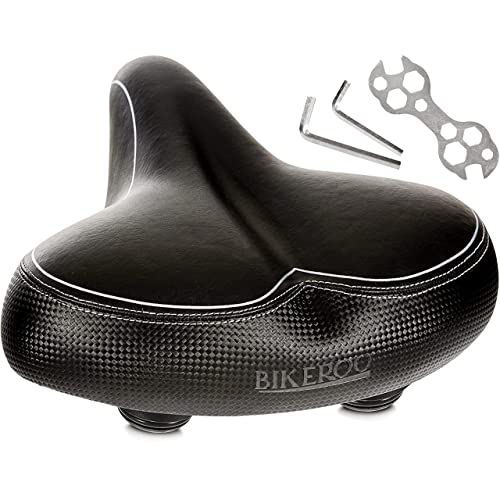 Bikeroo Wide Cruiser Saddle — ASIN B07B646ZZY | Check price on Amazon | |
 CDYWD Oversized Comfort Saddle — ASIN B0BFXMW9Z5 | Check price on Amazon |
Key takeaways
- The best road bike seat for everyday riders balances padding, width and pressure relief. Compare Fizik endurance and padded comfort saddles for road riding.
Most road riders do not need a racing saddle. They need a seat that stays comfortable at hour three of a weekend ride, on a bike set up with the bars at a sensible height, ridden in ordinary shorts as often as padded ones. That is a different design brief from the race paddock: a little more padding, a platform shaped for a slightly more upright pelvis, and pressure relief that works without demanding a perfect aero tuck. This guide covers road bike seats for general road riding — commuting, training and long recreational days — and explains the fit principles that matter more than any brand.
If your riding is competitive and your position aggressive, racing saddles are a separate category with their own logic of short noses and firm platforms. Everything here assumes the general road rider instead.
Disclosure: As an Amazon Associate, this site may earn from qualifying purchases made through links in this article, at no additional cost to you.
What makes a road seat comfortable
Sit bones carry the load. On a correctly fitted road seat, your weight rests on the two sit bones, not on the soft tissue between them. That requires a rear platform wide enough for your bone spacing. Sit-bone width varies by person and does not track body size in the way riders expect; many bike shops will measure it free, and the measurement converts directly into a saddle width choice.
Padding should support, not swallow. Very soft, deep padding feels luxurious for ten minutes. On a long ride the sit bones sink into it, the surrounding foam bulges upward into soft tissue, and pressure problems begin. The comfortable road seat uses moderate, resilient padding that holds the bones on the surface.
A relief channel earns its keep. A central channel or cutout reduces pressure on soft tissue when you roll your pelvis forward — reaching for the drops, climbing out of the saddle’s front, or simply tiring late in a ride and slumping. Riders who never feel soft-tissue pressure can ride a closed-top saddle happily; riders who do feel it should treat the channel as essential.
Length and nose shape. A standard-length nose gives room to shift position — forward for efforts, back for cruising — which spreads load across structures over a long ride. Riders who stay planted in one position can consider shorter shapes; riders who move around should keep the traditional length.
The seats in this guide
Fizik Tempo Argo R5 — ASIN B0821SXZXP
Fizik divides its saddles by riding style, and where the Vento line is built for racing, the Tempo line is its endurance range. The Tempo Argo R5 applies the modern short-nose shape to endurance riding: a 260 mm length, a choice of 150 mm and 160 mm widths, a carbon-reinforced nylon shell on S-Alloy rails, and Fizik’s Type 2 foam — a slightly thicker, more supportive formulation than its racing foam, placed to support a more upright posture. Published weight for the 150 mm version is about 241 grams.
This is the seat in this guide for the rider who wants current saddle thinking without racing compromises: the short nose removes the pressure point when you lean forward, the wider width options acknowledge that endurance riders’ sit bones need a proper platform, and the padding is tuned for distance rather than for the scale. Choose the width by measurement; the 160 mm is not the comfort upgrade, it is the fit for wider-spaced bones.
Bikeroo Wide Cruiser Saddle — ASIN B07B646ZZY
The Bikeroo saddle sits at the padded, wide end of the road-seat spectrum: a broad rear platform, generous cushioning and a shape aimed at riders who sit more upright and put more of their weight through the seat than a typical road position does. For riders returning to cycling, riding hybrids and endurance road bikes with relaxed geometry, or simply prioritising comfort over every other quality, this style of seat answers the brief directly.
The trade-offs are the honest ones for the category. A wide, padded seat can chafe the inner thighs on a true road position with a high saddle and low bars, and the extra material adds weight. Match the seat to the bike and the position: upright bike, upright seat.
CDYWD Oversized Comfort Saddle — ASIN B0BFXMW9Z5
The CDYWD oversized saddle follows the same philosophy as the Bikeroo — a wide platform and deep comfort intent — in the oversized format that riders with broader sit-bone spacing or a preference for maximum support tend to choose. Seats in this class commonly add elastomer or spring elements beneath the platform to take the edge off rough surfaces, which suits riders on poorly surfaced roads and bike paths.
As with all oversized seats, confirm the width against your riding position before ordering. On a road bike ridden with a meaningful saddle-to-bar drop, an oversized platform can interfere with the pedal stroke at the back of the thigh; on a relaxed road or fitness bike it is simply more seat where you want it.
YLG Oversized Saddle — ASIN B07QHTZHXD
The YLG oversized saddle completes the comfort end of this guide: another wide-platform, padding-forward design with a following among riders who found standard road saddles too narrow and too firm to live with. Its presence here alongside two similar seats is deliberate — within the oversized comfort class, the differences are in platform shape, padding density and mounting hardware, and riders who have decided this class suits them benefit from comparing the shapes rather than treating the class as one product.
A practical note for all three comfort seats: they mount on standard saddle rails and fit standard seatposts, so trying one does not commit your bike to anything. Keep the packaging until you have ridden the seat for a week; comfort verdicts delivered in the driveway are worthless, in this class most of all.
Fitting a road seat correctly
Height. Set saddle height so the knee keeps a soft bend at the bottom of the stroke. Too high rocks the pelvis and overloads soft tissue; too low overloads the knees and makes the seat feel harder than it is, because your legs stop sharing the work of supporting you.
Tilt. Start level. If soft-tissue pressure persists, lower the nose by a degree at a time. More than a couple of degrees and you slide forward, bracing with your arms and trading one discomfort for another.
Fore-aft. Position the seat so your sit bones land on the wide rear platform when your hands are on the hoods in your normal posture. If you find yourself perched on the nose, the seat is too far back or the reach is too long — fix the cause, not the symptom.
Shorts and time. Padded shorts and a new seat both change the interface; change one variable at a time when diagnosing comfort. And allow adaptation: sit bones condition to a new seat over two or three weeks of regular riding. Numbness is never an adaptation symptom — treat it as a fit fault and address it immediately.
Troubleshooting: match the symptom to the cause
Numbness or soft-tissue pain. The platform is too narrow, the nose is tilted up, or the saddle is too high. Check tilt and height first — both are free — then width, then a channel or cutout model.
Sit-bone pain that fades across a fortnight. Usually conditioning, especially on a firmer seat like the Tempo Argo. It should improve ride by ride. Pain that stays identical at week three is a fit problem, not a conditioning problem.
Sit-bone pain that never fades. The platform is the wrong width — most often too narrow, so the bones sit on the curved edges instead of the flat rear. Measure and change width, not padding.
Inner-thigh chafing. The seat is too wide for your position, or its edges flare where your thighs pass. This is the oversized-seat trade-off on low-bar road positions, and the cure is a narrower seat or a higher, more upright position — one of the two has to give.
Sliding forward constantly. The nose is tilted down too far, or the seat is too far back, or the reach to the bars is too long. Level the seat, then look at position as a whole rather than tilting further.
Lower-back ache late in rides. Often the pelvis rolling on a seat that does not support it, frequently a too-narrow platform again, and often compounded by a saddle set too high. Work through height, then width.
Materials, weather and care
Road seats live outdoors in all weathers on many bikes. Synthetic covers shrug off rain and wipe clean; leather covers mould to the rider over time and reward care with longevity, but they ask for proofing and dislike being left wet. Foam padding eventually packs down — a seat that felt supportive in spring can feel hollow by the following year, and replacing a packed-down seat restores comfort that riders often chase through shorts and position changes first. Keep mounting bolts checked and rails clean; a creak from beneath you at every pedal stroke is almost always the seat clamp asking for attention, and it is a two-minute fix that riders endure for months.
When to replace the seat you already own
Seats rarely fail dramatically; they fade. The signs that a road seat has finished its service are a cover split at the nose or edges, padding that stays compressed in two sit-bone dents instead of springing back, a platform that has taken a permanent twist, or rails that have bent in a crash — check rail straightness by eye along the seat’s length. A subtler sign is positional drift: if you keep nudging the seat’s tilt or height chasing a comfort that used to be there, the padding has likely packed down and changed the geometry you originally fitted. Replacement with the same model is the lowest-risk move in cycling when a seat has suited you; when it never quite did, use the troubleshooting section above to choose a different width or shape rather than a different colour of the same mistake.
Verdict
For the general road rider who wants a modern, distance-tuned seat, the Fizik Tempo Argo R5 (B0821SXZXP) is this guide’s leading recommendation. Riders on upright road and fitness bikes who want maximum padding and platform should compare the Bikeroo (B07B646ZZY), CDYWD (B0BFXMW9Z5) and YLG (B07QHTZHXD) oversized seats and choose by platform shape. Measure your sit bones first — that single number decides more comfort than any other choice on this page.