Key takeaways
- Backpack vs suitcase for travel: compare mobility, packing space, protection and comfort, with five carry-on picks to help you choose the right bag.
For most travelers, the honest answer is this: choose a travel backpack if your trip involves walking, stairs, cobblestones, or public transit, and choose a rolling suitcase if you mostly move between airports, taxis, and hotels on smooth floors. A backpack keeps your hands free and handles rough ground without complaint, while a suitcase rolls the weight for you and protects fragile items behind a structured shell. Neither format is universally better — the right pick depends on how you move once you land.
As an Amazon Associate, we earn from qualifying purchases.
Table of Contents
- Quick Verdict
- Side-by-Side: The Key Differences
- The Backpack Picks
- The Suitcase Picks
- Who Should Choose Which
- FAQ
- Conclusion
- Product and ASIN Reference
Quick Verdict
A travel backpack wins on mobility. It goes up stairs, across gravel, and through crowded stations without slowing down, and a carry-on-sized model in the 35 to 40 liter range holds a week of clothing when packed carefully. A suitcase wins on effortless transport and protection. Spinner wheels carry the load across terminals and lobbies, the rigid or structured walls guard breakables, and the rectangular interior stacks folded clothes neatly. If your itinerary is one hotel and a rental car, roll. If it is three cities, two trains, and a walk from the station, carry.
Side-by-Side: The Key Differences
Mobility on real ground
Wheels are wonderful on polished airport floors and a liability almost everywhere else. Cobblestones, cracked sidewalks, gravel paths, and staircases all fight a rolling bag, and a suitcase has to be carried by its handle the moment the surface turns rough. A backpack simply walks over all of it. Travelers moving through older European cities, rural areas, or multi-stop itineraries usually feel this difference within the first hour of a trip.
Effort and comfort
A suitcase transfers its weight to the floor, so even a heavy checked bag feels light while rolling. A backpack puts the full load on your body, which is why harness quality matters so much: a padded hip belt moves much of the weight to your legs, while a thin-strapped daypack-style bag becomes tiring quickly. For short walks between a taxi and a hotel desk, the backpack’s weight barely registers. For a mile-long walk to a station, a good hip belt or a set of wheels earns its keep.
Packing style and organization
Suitcases offer one large rectangular space that suits folded garments, packing cubes, and shoes lined along the edges. Travel backpacks built for one-bag travel open flat like a suitcase, so the packing experience is similar, but they add external pockets, laptop compartments, and compression straps that keep the load tight against your back. Soft backpack walls also squeeze into tight overhead bins and under-seat spaces where a rigid case will not flex.
Protection for fragile items
A hardside suitcase is the safer home for souvenirs, bottles, cameras without their own cases, and anything crushable. The shell absorbs knocks in the cargo hold and stacks without pressing on the contents. A backpack’s padding protects a laptop well, but the main compartment flexes under pressure, so fragile items need their own hard cases inside it. If you regularly bring home fragile purchases, the suitcase has a clear edge.
Size limits and airline rules
Both formats come in carry-on sizes that match the common 22 x 14 x 9 inch cabin limit. Backpacks hold a small advantage because their soft sides compress when a bin is nearly full, and many double as a personal item on stricter airlines when underpacked. Suitcases are measured exactly as built, wheels and handles included, so a case listed at the limit can occasionally be turned away at the gate.
The Backpack Picks
Tortuga 40L Travel Backpack Lite — Premium Backpack Pick
The Tortuga Lite is built around the idea of packing like a suitcase and carrying like a hiking pack. Its main compartment opens fully in clamshell style, so clothes lay flat and stay visible, and the padded hip belt with load-lifter straps shifts weight off the shoulders on long walks between stations. The shell uses 630D CORDURA nylon with YKK zippers, a combination aimed at years of regular travel rather than a single season.
Specs
- Capacity: 40 liters
- Dimensions: 22 x 14 x 8 inches
- Material: 630D CORDURA nylon
- Opening: full clamshell, suitcase-style packing
- Laptop compartment: padded, fits laptops up to 16 inches
- Carry system: padded hip belt and load-lifter straps
- Tier: premium
NOMATIC Travel Pack 20L — Mid-Range Backpack Pick
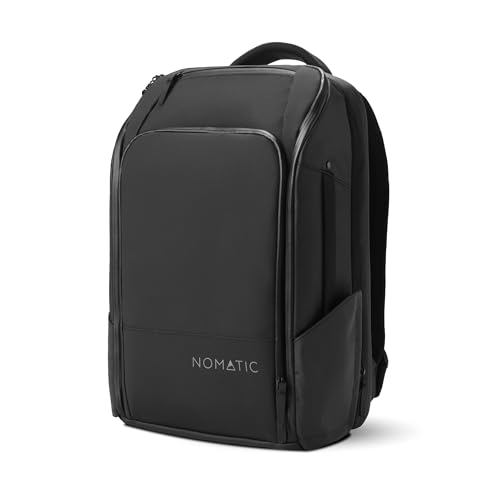
The NOMATIC Travel Pack suits shorter trips and travelers who pack light but organize heavily. It starts at 20 liters for a slim daily profile and expands to 30 liters when the return trip carries more than the outbound one. A dedicated laptop compartment fits machines up to 16 inches and lays flat for security screening, and an RFID-protected pocket keeps cards and a passport separated from the main load. The exterior is water resistant, which helps on rainy walks from the station.
Specs
- Capacity: 20 liters, expands to 30 liters
- Dimensions: 19 x 13 x 9 inches
- Laptop compartment: fits laptops up to 16 inches, TSA-ready lay-flat design
- Exterior: water resistant
- Security: RFID-protected pocket
- Expansion: zippered expansion for added packing room
- Tier: mid-range
Taygeer Travel Backpack 40L — Budget Backpack Pick

The Taygeer brings the 40 liter carry-on format to the budget tier. It opens flat for suitcase-style packing, includes a separate compartment for laptops up to 17.3 inches, and adds a USB charging port so a power bank inside the bag can charge a phone in an outside pocket. For occasional travelers who want one bag that handles a week-long trip without a premium outlay, it covers the essentials.
Specs
- Capacity: 40 liters
- Laptop compartment: fits laptops up to 17.3 inches
- Opening: lay-flat, TSA friendly main compartment
- Charging: built-in USB charging port
- Material: water resistant fabric
- Carry: padded shoulder straps and top handle
- Tier: budget
The Suitcase Picks
Samsonite Centric 2 Carry-On 20-Inch — Mid-Range Suitcase Pick

The Centric 2 is a hardside spinner sized for the cabin, with a scratch-resistant polycarbonate shell that shrugs off the scuffs of overhead bins and baggage belts. It expands for the return trip, rolls on spinner wheels in any direction, and includes a USB charging port on the carry-on size for connecting a power bank. At 7.5 pounds it stays reasonable to lift into a bin even when fully packed.
Specs
- Size: 20-inch carry-on
- Dimensions: 22 x 14 x 9.5 inches
- Weight: 7.5 pounds
- Shell: scratch-resistant polycarbonate
- Expansion: yes, for added packing capacity
- Wheels: spinner wheels
- Charging: USB port on the carry-on size
- Tier: mid-range
DELSEY Paris Chatelet Air 2.0 Carry-On 19-Inch — Premium Suitcase Pick

The Chatelet Air 2.0 pairs a lightweight polycarbonate shell with the detailing of a premium case: 360-degree spinner wheels, a TSA combination lock, a USB port, and faux-leather trim. The 19-inch size suits strict cabin limits and shorter trips, and the line carries a 10-year limited warranty, which signals how the maker expects the shell and wheels to hold up over years of travel.
Specs
- Size: 19-inch carry-on
- Shell: polycarbonate with faux-leather trim
- Wheels: 360-degree spinner wheels
- Lock: TSA combination lock
- Charging: USB port
- Warranty: 10-year limited warranty
- Tier: premium
Who Should Choose Which
Choose a travel backpack if your trips involve walking between stations and lodging, climbing stairs, riding public transit, or moving through several stops in one journey. Backpacks also suit travelers who want one bag that works as both a carry-on and a day bag at the destination, and anyone who prefers keeping both hands free. A model with a real hip belt, like the Tortuga above, is the safer pick for loads carried longer than a few minutes.
Choose a rolling suitcase if you fly point to point, stay in one place, and move mainly across smooth floors. Suitcases suit business travelers who need clothes to arrive flat and unwrinkled, anyone packing fragile items, and travelers who should not carry weight on their back or shoulders. A hardside spinner like the Centric 2 or the Chatelet Air 2.0 also stacks and stores more predictably at home.
Plenty of travelers end up owning both: a backpack for multi-stop adventures and a suitcase for straightforward fly-and-stay trips. Matching the bag to the itinerary matters more than loyalty to one format.
FAQ
Is a backpack or suitcase better for carry-on only travel?
Both work, and the better choice depends on the trip. A 40 liter travel backpack holds roughly a week of clothing, stays flexible in tight bins, and keeps you mobile after landing. A carry-on suitcase rolls the same amount with less physical effort and protects contents better. For multi-stop trips, the backpack usually wins; for single-destination trips, the suitcase usually wins.
How many liters do I need for a week-long trip?
Most travelers manage a week in 35 to 45 liters when they rewear bottoms and pack versatile layers. That range covers the 40 liter backpacks and the typical carry-on suitcase in this guide. Trips involving bulky items like boots, heavy coats, or formal wear push toward the top of the range or into a checked bag.
Can a travel backpack protect fragile items as well as a suitcase?
Not on its own. A backpack’s padded laptop sleeve protects a computer well, but the main compartment flexes, so bottles, ceramics, and electronics without cases can be crushed when the bag is stacked or sat on. Travelers who carry fragile items in a backpack should add a hard case inside it, or choose a hardside suitcase whose shell absorbs the pressure instead.
Which is better for trips with lots of walking and stairs?
A backpack, provided it has a supportive harness. Stairs, cobblestones, and uneven paths force a rolling suitcase to be carried by its handle, which strains one arm and slows you down. A backpack with a padded hip belt spreads the load across your body and leaves your hands free for railings, doors, and tickets.
Conclusion
Backpack vs suitcase for travel comes down to terrain and travel style. Backpacks reward travelers who walk, climb, and hop between stops; suitcases reward travelers who roll between the airport and a single base and want their belongings protected and their shoulders rested. The five picks above cover both formats across budget, mid-range, and premium tiers, so the practical move is to picture your next itinerary, count the stairs and transfers in it, and let that decide which side of this comparison earns your money.